‘Real problems existed’: Russia to introduce GOST standard for glamping
The standard will define requirements for countryside facilities
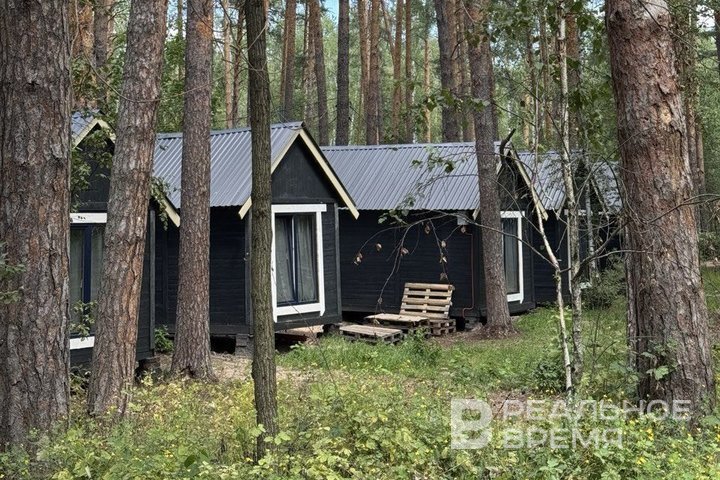
Russia has approved its first GOST establishing the concept of glamping and setting requirements for it. The country’s rural tourism market has long awaited such a document, experts told Realnoe Vremya. The absence of regulation had caused numerous issues — a property could call itself a glamping site simply by placing a single unregulated house on a residential plot. At the same time, the GOST remains voluntary. Read more in Realnoe Vremya.
First standard
Rosstandart has approved the first GOST establishing requirements for glamping and the services provided within it, the agency’s press service reported.
According to the new standard, a glamping site can be organised in natural areas, rural locations, mountains, forests, near bodies of water, on islands, and so on. At the same time, measures must be taken to account for special conditions regarding environmental protection and human health.

The GOST also sets out requirements for the placement and layout of glamping sites, requirements for the site territory, engineering and utility networks, accommodation modules, information provision, the range of services offered at the glamping site, staff, as well as safety and environmental protection standards.
“GOST R 72311-2025 provides, for the first time, an official definition of glamping and sets specific requirements for site location, accommodation modules, engineering networks, services offered, and staff. The standard ensures a uniform level of quality and safety for tourists, as well as measures for environmental protection and the preservation of natural and cultural heritage. Moreover, the introduction of this definition expands the industry’s conceptual framework, creates unified guidelines for businesses, and guarantees tourists a consistent level of quality, safety, and environmental care,” said Anton Shalaev, Head of Rosstandart.
Until now, Russia had no regulations governing the construction or operation of glamping sites. Furthermore, the concept itself was not enshrined in legislation, making it impossible to ensure a uniform level of quality and safety.
The initiative has been supported by the State Committee for Tourism of Tatarstan.

“We’ve been waiting for this”
As co-founder of the Urman Camp glamping site, Ilnar Khamidullin, told Realnoe Vremya, the sector faced certain difficulties due to the lack of regulations:
“In some regions, there were real problems. This year, all accommodation facilities underwent classification, but the only options were camping or holiday resorts — glamping was not on the list. Because of this, in advertising and on booking platforms, we couldn’t position ourselves as what we truly are.”
Khamidullin explained that the GOST will help remove “unclear” facilities from the market:
“We have often said that a standard was needed to eliminate unclear properties — one or two houses on garden plots that are not true glamping sites. After all, glamping is high-quality countryside accommodation in nature with a high level of comfort. This is a fundamental factor. Once the standard is in place, the number of unsuitable facilities will decrease significantly. We’ve been waiting for this for a long time!”
“Defining the concept is already an achievement”
A similar view was expressed by Ekaterina Egorova, curator of investment projects at the Directorate for the Development of Natural Areas and Ecotourism at the Institute for Urban Development of Tatarstan. She noted that until now, the very concept of glamping had been unclear to many.
“The standard formalises the concept of ‘glamping’ and introduces it into the regulatory framework — this is already an achievement. Although the industry began to take shape around 10 years ago, and in our republic 5–6 years ago, for many people it was still not entirely clear what glamping actually is. Some called any holiday resort a glamping site, some referred to a single private house on a residential plot, and others used the term to describe modular homes, thinking each home was a glamping unit. In addition, this means that the glamping business has been noticed and recognised at the legislative level,” she told Realnoe Vremya.
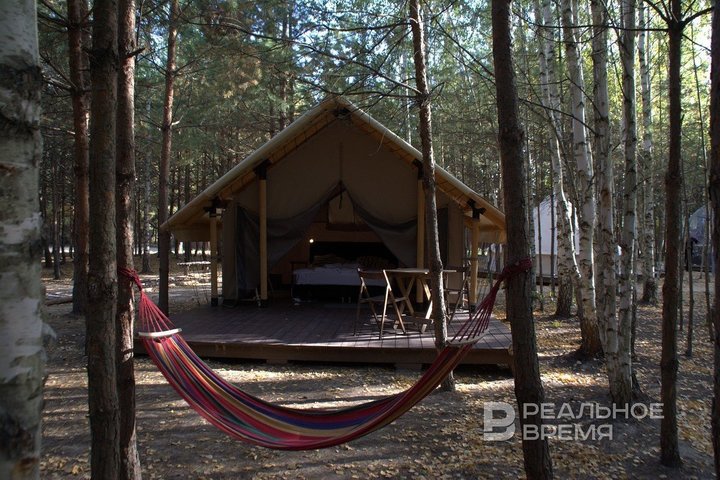
According to her, classification for glamping sites had been a “sore point.” Due to the absence of such facilities in regulations, it was unclear whether the term could be used for promotion on social media and in advertising.
“In our view, the current task of the GOST is to define the terminology and establish basic standards for glamping. The approval of the GOST is an advantage for accommodation facilities that genuinely qualify as glamping sites in terms of service level and site development, and therefore incur higher costs than two or three private houses that simply place a few tubs and market themselves as glamping. The presence of an approved standard should ensure that such properties no longer call themselves glamping sites, and as a result, the flow of guests seeking this type of countryside accommodation will be redistributed among genuine glamping sites,” Egorova concluded.