Kaaba comes to life in VR at Kazan’s Marjani Mosque
The World of the Quran exhibition has arrived in Kazan

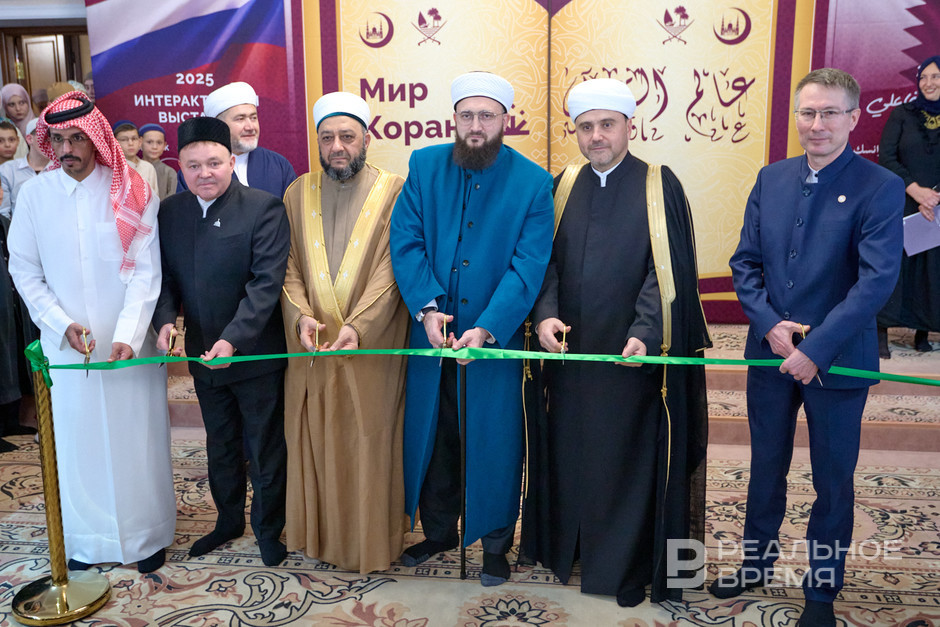
After Moscow, Saratov and Saransk, the Russian-Qatari interactive exhibition The World of the Quran has been brought to the Marjani Mosque in Kazan. The exposition features a wide range of information about the main book of Islam, accompanied by film screenings, children’s activities, and immersion in virtual reality. The exhibition is open to everyone.
“We added, as they say nowadays, our own creative touch”
The World of the Quran exhibition was first opened in November last year at the Moscow Cathedral Mosque. It was organised by the Spiritual Administration of Muslims of the Russian Federation and the Ministry of Awqaf and Islamic Affairs of the State of Qatar.
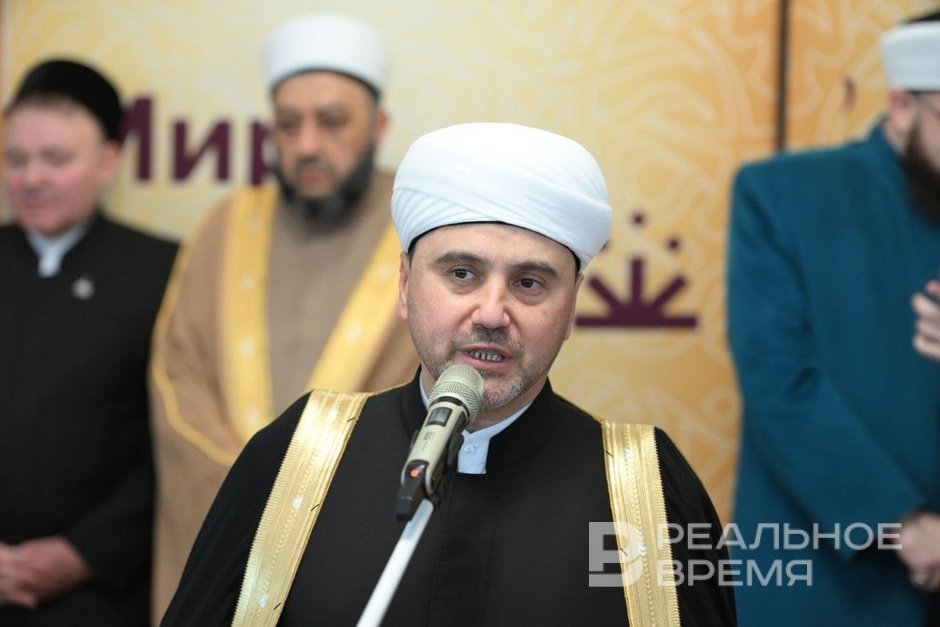
“They had their own vision, and we added, as they say nowadays, our own creative touch. As a result, we created a truly unique exhibition,” said Rushan Abbyasov, Deputy Chairman of the Spiritual Administration of Muslims of Russia.
After that, he explained, there were many requests from other cities. As a result, the exhibition in 2025 was shown in Moscow, Saratov and Saransk. The final stop of the tour is Kazan, supported by the Spiritual Administration of Muslims of the Republic of Tatarstan. In particular, the Mufti of Tatarstan, Kamil Samigullin, presented Abbyasov with a Quran printed by the Khuzur publishing house and expressed hope that the book would be included in the exhibition.
How the Quran was compiled, verified and perfected
The exhibition has been set up in the right wing of the mosque, spanning two floors. On the first floor, large fabric panels present a wide range of information about the holy book of Muslims.
According to tradition, the Quran was revealed to the Prophet Muhammad through the Angel Jibril from the year 610 to 632. The first revelation came during the Night of Decree in the month of Ramadan, when the Prophet was 40 years old.
Among the Prophet’s companions were those who could write. They recorded the revelations on anything available — palm leaves, flat stones, camel and sheep bones, and wooden saddles (examples of these can be seen in the exhibition). In addition, the Prophet himself recited passages, chose those who would read to him and to others, and sent his companions to various tribes.

Later, the written records were compiled into a single collection, with the information compared against the texts memorised by heart. This work continued from 633 to 635. In 645, Caliph Uthman ibn Affan ordered the creation of a unified compilation, which became known as the Uthmanic Codex (rasm ‘Uthmani), approved by all the Prophet’s companions. The Quran contains 114 surahs (chapters), 77,439 words and 323,015 letters.
The early European editions of the Quran — in Venice in 1537, Hamburg in 1694, and the Netherlands in 1698 — contained errors and did not follow the proper rules. However, later it began to be published in Russia. The exhibition examines the printing of the Quran in St Petersburg in 1787. For instance, it turns out that a special font based on the Arabic script naskh was developed specifically for it. A separate display is also dedicated to calligraphy.
A separate display is dedicated to the Kazan Basmasy — the first Kazan edition of the Quran, published in August 1803. Since then, it has been printed in the city 165 times before the Revolution. The exhibition includes an 1898 edition, and if Kamil khazrat’s words come true, a new modern copy will soon appear.
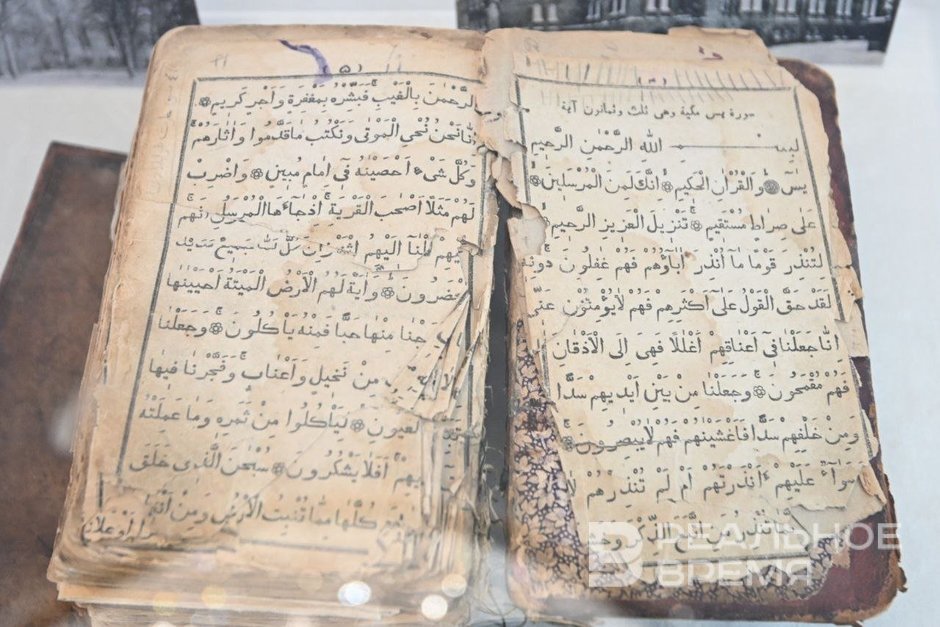
Among other remarkable exhibits are a Quran printed in Braille, a series of postage stamps, a book that survived the Siege of Leningrad, and a handwritten Quran from the Tambov region.
Perhaps one of the lesser-known topics is the history of diacritical marks and vowel signs. Initially, the Quran did not contain them — yet readers could distinguish the words without difficulty, as they knew Arabic as their native language and could even hear the surahs recited by the Prophet or his companions. The emergence of this new system signified that Islam had begun to spread beyond the Arab world.
Incidentally, the exhibition features separate quotations that highlight messages of peace and good neighbourliness. For example: “Engage in dialogue with the People of the Book in the most gracious manner!” The display lists the sacred scriptures — the Scrolls (revelations to Adam, Shees, Idris and Ibrahim), the Psalms, the Torah, the Gospel and the Quran. It then concludes that these books are united by their calls to reject evil, to believe in God, and to pursue virtue.
Qatari virtual reality
On the second floor, there is a space for children’s workshops and a virtual reality zone. Thanks to it, visitors can experience Mecca, Medina, and even enter the sacred Kaaba. Interestingly, in accordance with Islamic traditions, there are no people or animals in the VR experience. This part of the project was prepared by Qatari colleagues working on the exhibition.
The interactivity of the exhibition, running from 4 to 6 October, also lies in the fact that The World of the Quran can be explored with a certificate, collecting markers along the way. Visitors can study calligraphy, the Arabic alphabet, read the main surah of the Quran, Al-Fatiha, and receive gifts in the end.

Daily film screenings include Al-Khwarizmi — Father of Mathematics, The History of the Quran: From Revelation to Scripture, and Al-Zahrawi — Father of Surgery. Two films that participated in the Altyn Minbar festival will also be shown. These are Khäterdä (In Memory) by director Amir Abbyasov, about veteran Abdulvagat Arifullin, who attended the Day of Remembrance for the victims of repression, commemorated by two Tatar villages — Semenovka and Poshatovo in the Nizhny Novgorod region; and Khyal (Dream) by Renat Abyanov, about Ural Hazrat Mavlidzhan, who dreams of performing the Hajj.
In Kazan, The World of the Quran will conclude its Russian tour this year. However, as Rushan Abbyasov said, there have already been requests to bring it to the Caucasus, Siberia, and the Far East, which will likely happen in 2026.