Thousands of lawyers gather in Kazan to challenge attorneys’ monopoly and ‘harness’ AI
The capital of Tatarstan has once again become the legal centre of Russia
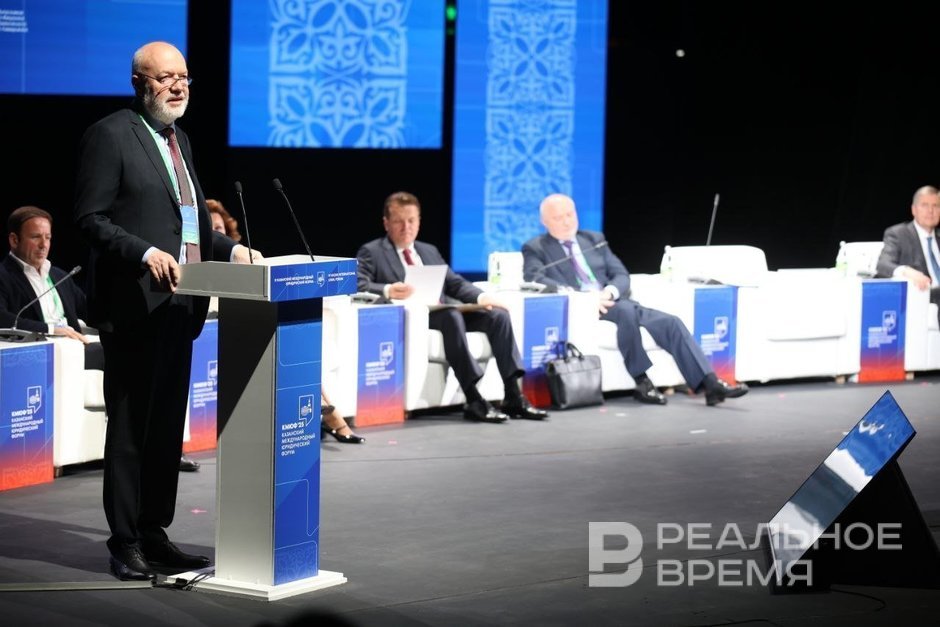
The capital of Tatarstan has become the legal centre of Russia for the fourth time. This refers to the Kazan International Legal Forum. This year it has brought together around one and a half thousand participants from 28 countries. According to the mayor of Kazan, Ilsur Metshin, along with the growth in the number of participants, which he is certainly pleased about, the significance of the event is also increasing. What devotees of Themis will be engaged in — in the report of Realnoe Vremya.
Not only lawyers have a place in court
One of the main themes of the legal forum was the discussion of the “attorneys’ monopoly.” This concerns a draft law under which the status of attorney would be made mandatory for courtroom representatives.
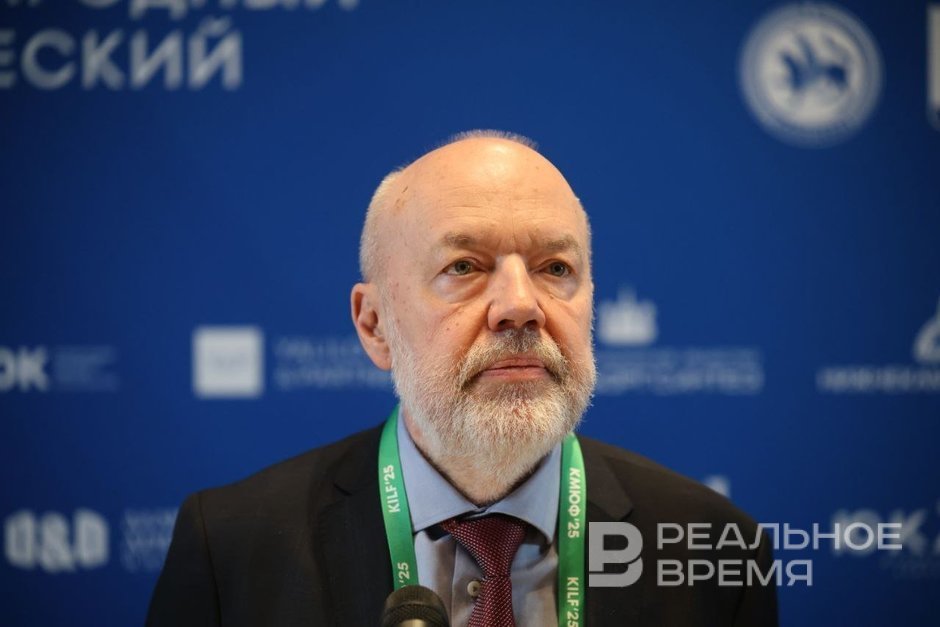
However, according to the head of the State Duma Committee on State Building and Legislation, Pavel Krasheninnikov, the existing concept requires serious revision and may ultimately lead to negative consequences both for the system itself and for citizens in need of legal assistance.
Number of universities producing law graduates has declined — but what about quality?
The need for “evolution, not revolution” in the legal sphere was mentioned by every participant of the plenary session that opened the KILF. Thus, the director of the Institute of Legislation and Comparative Law under the Government of Russia, deputy president of the Russian Academy of Sciences Taliya Khabrieva, stated that the platform has long ceased to be merely a host — the forum has already begun to set trends and generate legal meanings.
“Our legal system has demonstrated its competitiveness and viability, and moreover, it is precisely law — although it is undergoing transformation — that serves as the main instrument for protecting the sovereignty of the state and society, as well as a means of safeguarding our civilisational achievements. Look at what is happening: even now the Special Military Operation has become a driver of the development of social legislation and the expansion of social guarantees. Speaking of what is happening in law — some functions are being transformed, and the most notable trend is that our legal system has not taken a stance of passive defence, it is actively adapting,” Khabrieva is convinced.
At the same time, modernisation of the field is impossible without updating the educational system.
“In the early 2000s, there were more than 1,300 universities in Russia issuing diplomas in higher legal education; today, there are 600,” said Vladimir Gruzdev, chairman of the board of the Association of Lawyers of Russia. “The quality of legal education directly depends on the specialisation of the educational institution. At present, the labour market is oversaturated with lawyers who obtained diplomas from non-specialised universities.”
Gruzdev was supported in this by Krasheninnikov. According to him, those who have obtained a law diploma are not truly lawyers, yet they “continue to decide people’s fates.”
That is why blacklists and whitelists of universities have begun to be published, primarily for parents, so they know where [it is worth applying]. The struggle is ongoing and will continue, but classical universities remain as they were, Krasheninnikov assured.
However, according to the chairman of the Federation Council Committee on Constitutional Legislation and State Building, Andrey Klishas, one of the main challenges today is a certain sluggishness of the sector.
“We need to develop the institution. Our main problem is that many areas — such as AI and the digital sphere — are developing so rapidly that we cannot keep up. And it is not only that we fail to catch fraudsters, but we simply do not even have the appropriate terminology to describe processes and phenomena,” Klishas lamented.
AI will not be able to say whether a person is “guilty or not”
Another key topic that Realnoe Vremya discussed with forum guests was the introduction of artificial intelligence into the justice system. The former chairman of the Supreme Court of Tatarstan, head of the Constitutional Council of the Republic of Tatarstan Ilgiz Gilazov, stated that AI may become more of an assistant in drafting documents, but it will certainly not replace a human.