Aksakov: ‘Bankers have lodged complaints that the Central Bank is acting too slowly’
Leading figures of the financial market have discussed the paths of Russia’s economic development in an era of global change
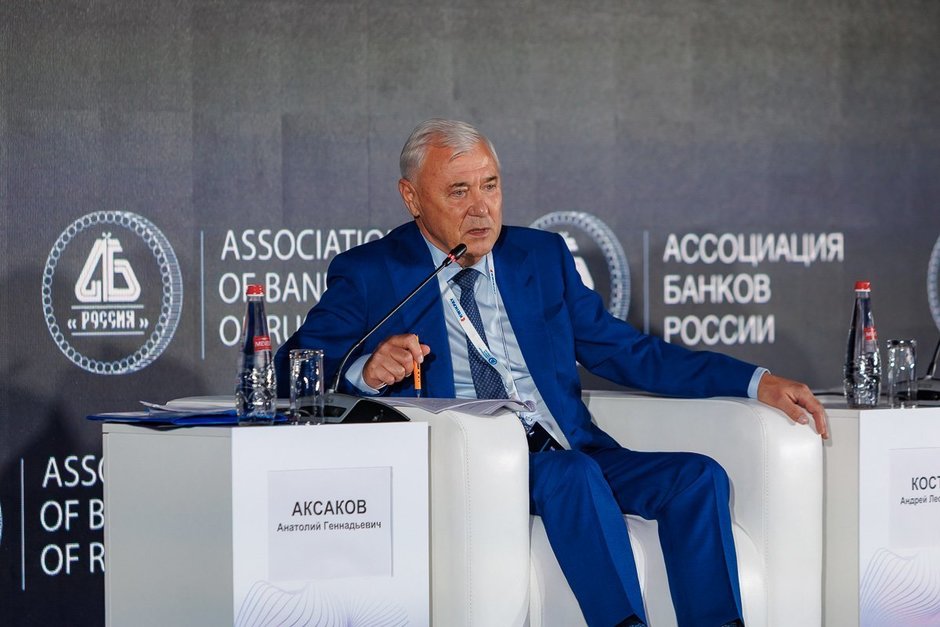
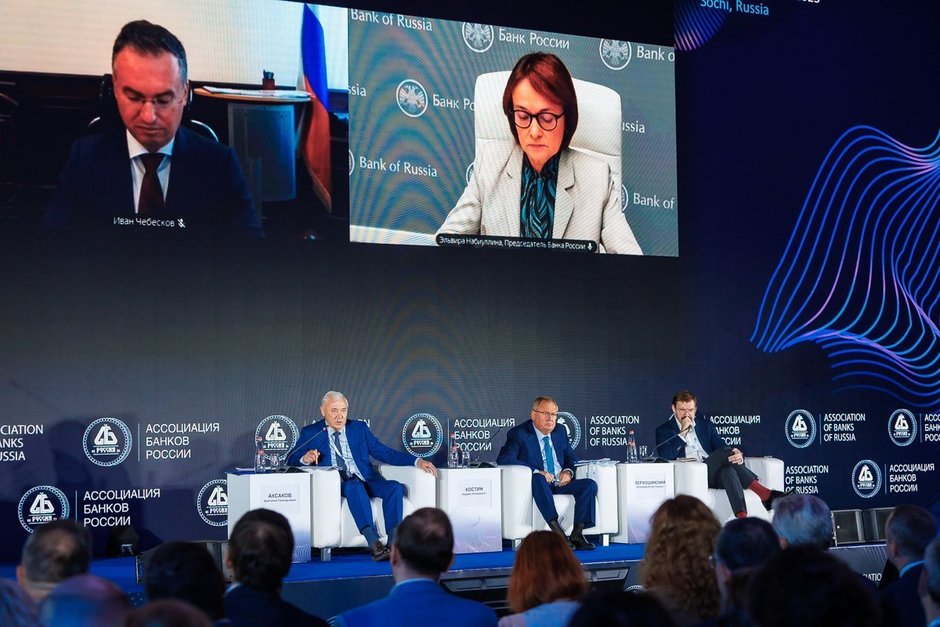
A heated debate broke out among the country’s leading financial market participants at the plenary session of the International Banking Forum in Sochi. The focus of the dispute was the actions of the Central Bank — the banking community is expecting more decisive steps from the regulator to support economic lending. However, as Elvira Nabiullina stated, in the face of key challenges the Bank of Russia intends to act cautiously and predictably. The head of the Central Bank pointed to a balanced budget and the planned increase in VAT as factors that will help avoid a sharp tightening of monetary policy in the future. Read the details in the report by digital economist Ravil Akhtyamov from the IBF, exclusively for Realnoe Vremya.
“Central Bank is acting too slowly and indecisively”
At the plenary session of the IBF in Sochi, a fundamental debate unfolded between the head of the Bank of Russia, Elvira Nabiullina, and representatives of the banking community over the pace of the key rate reduction and new operating rules. The main subject of contention was the Central Bank’s monetary policy. Anatoly Aksakov, Chairman of the State Duma Committee on the Financial Market, speaking on behalf of bankers, voiced dissatisfaction with the overly slow reduction of the key rate, which in September was lowered to 17%.
“Many were expecting more decisive action to support economic lending. Bankers came to me with complaints that the Central Bank is acting too slowly and indecisively,” Aksakov noted.
Elvira Nabiullina took part in the forum remotely, clearly outlining the regulator’s position by pointing to the risks of a repeat of the scenario of the first half of 2024, when the expectations of economic agents for a too rapid reduction of the key rate, amid heightened inflationary expectations, led to a new round of rising prices.
“We are for the first time going through a full economic cycle and emerging from overheating”
The head of the Central Bank highlighted three reasons for a measured approach: the seasonal nature of the slowdown in inflation, high inflationary expectations, and the acceleration of lending activity in July–August.
“We are for the first time going through a full economic cycle and emerging from overheating. If anyone doubts that inflation will slow, then there is no need to repeat the lessons of last year,” Nabiullina stated.
Answering questions about the impact of fiscal policy, the head of the Central Bank praised the government’s decision to raise VAT instead of increasing the deficit.
“The draft budget we regard as disinflationary. Had the government chosen the path of raising the deficit, we would have had to significantly increase the rate forecast for 2026 from the current 12–13%,” Nabiullina explained.
She noted that the effect of the VAT increase would be temporary, referring to the experience of 2019, when the tax rise added only 0.6–0.7% to inflation.
Regulatory policy of the Central Bank: a balanced approach to growth
The head of the Bank of Russia stressed that regulatory policy is aimed at supporting economic growth while maintaining macroeconomic stability. The key principle is the implementation of changes within well-considered and predictable timeframes, which creates stable conditions for financing the real sector.
The resilience of the banking system is confirmed by capital growth of 13% per year, even after the payment of dividends. This provides the potential for credit growth of 8–12% annually — a pace the Central Bank considers adequate, avoiding the risks of overheating.
To maintain this dynamic, the regulator is consistently implementing a series of measures:
- differentiated capital surcharges for systemically important banks (from 2028),
- gradual increase of the minimum capital requirement for banks, which has not been revised since 2018.
The current thresholds (300 million rubles for a basic licence and 1 billion rubles for a universal one) already correspond less to the needs of the economy. Any potential change will be phased in to give banks the opportunity to adapt.
A particular emphasis has been placed on supporting priority areas, notably technological sovereignty projects. The programme is already showing progress: by early August, 55 projects with a total budget of 5.3 trillion rubles had been approved, 1 trillion rubles in loans issued, and credit lines worth 2.7 trillion rubles opened. For further activation of the process, synergy with government support measures is essential, such as regional investment tax deductions and programmes for small technology companies. Thus, the Central Bank’s policy combines both macroprudential control and targeted incentives, ensuring balanced development of the financial sector and the economy as a whole.
Balanced growth: stock market as an alternative to loans
Participants in the discussion agreed that it is impossible to finance all economic growth solely through bank lending. Particular attention was given to the problem of the concentration of credit resources among large companies. Nabiullina acknowledged that active lending to borrowers less sensitive to the interest rate limits opportunities for other organisations.
“If large companies take up all the credit, then less remains for others. That is why control over the debt burden of large companies is important,” the head of the Central Bank stressed.
To address this issue, the Bank of Russia has introduced restrictions through special surcharges. Around 30 groups of companies, whose total debt accounts for 14% of the corporate portfolio, fall under this regulation.
Ivan Chebeskov, Deputy Minister of Finance of the Russian Federation, provided a detailed overview of measures to support the stock market, including the launch of a mechanism to subsidise IPO costs for small and medium-sized enterprises (SMEs) and work on a system of incentives for managers of state-owned companies. An important signal was the announcement of a separate federal project for the development of the financial market, which, according to Chebeskov, demonstrates the highest priority of this task. “Without a properly functioning stock market, we will not achieve sufficient economic growth,” he noted.
Elvira Nabiullina supported this direction, adding that improving the quality of corporate governance is a key element in building trust in the market. Educational initiatives were also highlighted, such as the Moscow Exchange’s programme for training companies to go public.
Digital transformation: regulation and prospects for digital financial assets
A significant part of the discussion was devoted to the development of the digital financial assets (DFA) market. Elvira Nabiullina announced plans to expand access for non-qualified investors from 1 January 2026, develop mechanisms for credit DFAs, allow brokers and asset management companies to enter this market, and increase transparency while harmonising the tax regime.
“We believe that digital financial assets have a great future,” the head of the Central Bank stated. “This is not a niche story, but a mass technology that will soon become widespread. And the best argument is the trillions of roubles already circulating in this market today. For investors, this is an excellent signal of its enormous potential.”
At the same time, existing obstacles were identified. The main one was recognised as the tax imbalance between digital financial assets and traditional financial instruments. To address this issue, market participants were encouraged to actively prepare concrete proposals to harmonise taxation. The discussion also covered the need for alignment with international standards for cross-border operations and the importance of increasing transparency through industry disclosure standards.
An example of an innovative approach was the digital square metres marketplace project on one of the federal bank’s platforms. In cooperation with the Ministry of Finance, the bank is developing a product that will allow families to invest in real estate through the purchase of digital financial assets (DFAs) issued on the platform. Accumulating funds for housing becomes accessible through investments in tokenised real assets.
New rules of the game: balancing stability and development
In the field of banking regulation, the discussion continued on the application of Basel standards (“Basel III”). Participants’ positions were divided: the president and chairman of VTB, Andrey Kostin, expressed scepticism, while the head of the Bank of Russia, Elvira Nabiullina, defended these principles, comparing them to “universal laws of physics” that operate everywhere but allow for national specificities. The national short-term liquidity standard, scheduled for introduction on 1 October (effectively in early November), turned out to be more lenient than the Basel standard, reflecting national characteristics.
Meanwhile, criticism of strict regulation is also being voiced abroad. As early as July 2025, Bloomberg cited Markus Chromik, the new Chief Risk Officer of Deutsche Bank, who pointed to its negative impact on financing critically important sectors, including the defence industry, which requires long-term investments of 8–10 years. Chromik warned Europe against introducing destructive rules, ironically noting that otherwise the continent’s future could be summed up with the phrase: “Unfortunately, they had few tanks, but banking regulation was truly top-notch.”
Another important trend has been the tightening of oversight. The head of the Central Bank reported on the preparation of a draft law to significantly increase fines for banks for violations in anti-money laundering and consumer protection (up to 1% of banks’ capital). Nabiullina justified this by the need to improve risk management and citizen protection, noting that current fines are not a sufficient deterrent.
Looking to the future: banks on the threshold of change
In the concluding part of the forum, the future of the banking system was discussed. Elvira Nabiullina highlighted the main trends for the next 10–15 years: technological transformation, integration with ecosystems, strengthened protection against cyberattacks, and competition with alternative sources of financing. “Banks need to be ready for the fact that they are no longer conservative institutions with large offices, but mobile, flexible organisations,” she concluded.
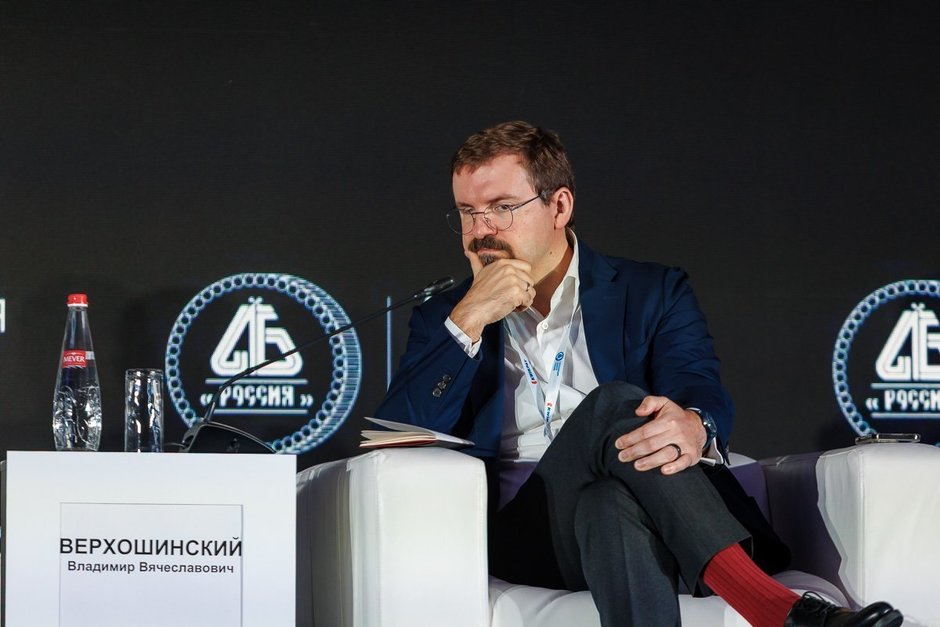
Vladimir Verkhoshinsky, Chief Managing Director of Alfa-Bank, presented his vision of the emergence of “new technological giants” — large platforms combining finance, e-commerce, telecommunications, and other services. In his view, Russia has a chance to become a country where such platforms will emerge, but for this, regulators need to adapt legislation more quickly.
Following the session, “Platform Economy: A Financial Sector Perspective,” it is important to highlight two defining factors in the development of ecosystems.
The objective necessity of payment integration. The growth of the share of bank marketplaces in the e-money market from 2% to 40% over three years indicates a fundamental market transformation. Integration of payment services has moved from being a competitive advantage to becoming a mandatory condition for maintaining market positions.
The need for regulatory adaptation. The rapid development of platform-based payments requires the Bank of Russia to address a complex task: creating flexible regulatory approaches that, on one hand, ensure financial stability, and on the other, do not hinder the innovative development of the sector.

The projected reach of 86 million wallets by 2025 provides a strong foundation for competition in the domestic market. However, for entry into the international arena, scale alone is not enough. In my view, the next key steps should be the development of cross-border payment solutions, strengthening the brand, and building partnerships with foreign players. Without this, the achieved scale will remain a local success.
Such rapid growth of bank marketplaces has not gone unnoticed and is raising concerns among traditional banks. Large banks (such as Sberbank, VTB, and Alfa-Bank) cite unequal competitive conditions. They point out that bank marketplaces do not have the status of systemically important institutions and therefore do not bear comparable regulatory costs. Their main complaint is the practice of offering discounts depending on the payment method, which they describe as “payment method discrimination.”
As a solution, traditional banks propose a legislative ban on linking discounts to specific payment methods. In addition, the Bank of Russia is considering tightening regulation, including a review of the criteria for recognising banks as systemically important, which could potentially affect marketplace banks as well.
Questions of social responsibility were also raised. Nabiullina called on banks to more actively implement customer-oriented practices, noting that this is not merely a formal requirement but an actual organisation of work to protect consumer rights.
IBF results: balance as the new norm
Despite disagreements over the pace of monetary policy easing, the plenary discussion demonstrated the continuation of constructive dialogue between the supervisory authority and the banking community. Forum participants agreed that the current course is aimed at ensuring sustainable growth without inflation spikes, balancing support for the economy with risk control.
Elvira Nabiullina summed up: “The development of the stock market and the banking sector must proceed in parallel, taking into account national specificities and contemporary challenges. Predictability in budgetary policy is the most important factor when making decisions on the key rate.”
Thus, the International Banking Forum in Sochi outlined the contours of Russia’s future financial system: measured monetary policy, active development of the stock market and digital assets, strengthened regulatory frameworks, and the inevitable technological transformation of banks, which will need to become more flexible and customer-oriented in the new reality.