Small and medium-sized businesses in Tatarstan earn over a third of a trillion on public procurement
This year, alongside office equipment and stationery, government agencies purchased light industry goods and IT solutions

Since the beginning of the year, small and medium-sized businesses have earned 390 billion rubles from Tatarstan’s public contracts, roughly 10% more than last year. The republic ranked among the top three regions for procurement from SMEs, behind only Moscow (1.44 trillion rubles) and Saint Petersburg (0.42 trillion rubles). Realnoe Vremya has investigated what helped these entrepreneurs increase their share in public procurement and what products were purchased from them at public expense.
Top 10 leaders in public procurement among SMEs in Tatarstan
In 2025, Tatarstan shows the highest growth in Russia in the volume of public procurement from SMEs — 129 billion rubles more than the previous year. In total, small and medium-sized businesses managed to earn 390 billion rubles through participation in the republic’s tenders, according to data from the Russian Ministry of Economic Development.
As reported to Realnoe Vremya by the State Committee of the Republic of Tatarstan for Public Procurement, among the many market participants, ten small and medium-sized companies in Tatarstan stand out, having significantly increased their profits through active participation in procurement under Federal Law 44-FZ.
Top 5 municipalities of Tatarstan by revenue of public procurement suppliers
Maria Almazova, Deputy Chair of the State Committee of the Republic of Tatarstan for Procurement, told our publication that the public procurement market is gradually expanding and covering new categories of goods:
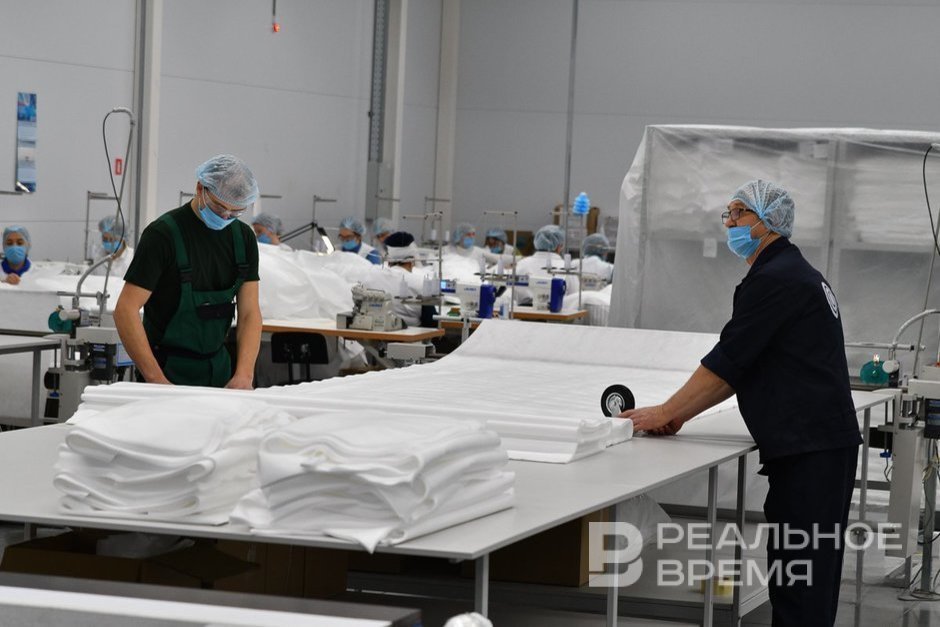
“Alongside traditional items such as computers, household appliances, stationery, and consumables, customers are actively purchasing light industry products, including innovative developments and even high-tech solutions. The share of contracts concluded with small business entities continues to grow. This is not only a saving of budget funds but also significant support for the republic’s small businesses,” she noted.
The main contribution to the volume of public procurement naturally comes from Kazan — supplier revenue there has grown to 91.8 billion rubles. For comparison, this is more than in all 43 districts of the republic combined. Also among the leaders are Naberezhnye Chelny — 3.3 billion, Nizhnekamsky District — 1.9 billion, Almetyevsky — 1.8 billion, and Yelabuzhsky — 1.6 billion.
The top three laggards in the ranking by volume of public procurement were Atninsky, Rybno-Slobodsky, and Kaibitsky districts, each of which sold goods worth just over 50 million rubles.
Growth of SME share thanks to legal innovations
According to Artur Nikolaev, Deputy Chair of the Chamber of Commerce and Industry of the Republic of Tatarstan, the system of interaction between large and state-owned companies and small and medium-sized businesses has received a significant boost thanks to legislative changes, which establish a mandatory 25% share of annual procurement from SMEs. Of this volume, at least 20% is now allocated through a special closed-type tender procedure.
In the expert’s opinion, large projects from last year, which resulted in the transfer of many orders to the federal level, made a significant contribution to the development of the regional market. However, even despite a temporary decline in the volume of federal orders, the regional market continues to show positive dynamics.
One of the key features is the ability of small and medium-sized businesses to quickly adapt to new conditions, respond promptly to customer requests, and flexibly adjust their production activities. This allows large companies to save time and resources by choosing reliable local suppliers, the speaker emphasised.
In addition, the increase occurred primarily because Tatarstan has its own platform for selling products — the Republican Marketing Center. Small and medium-sized businesses can use the platform to showcase their products, and a certain administrative support for local producers cannot be ruled out. Thanks to the support of the republican authorities and the active participation of large corporate customers, the republic has been able to significantly increase the volume of transactions with small and medium-sized enterprises.
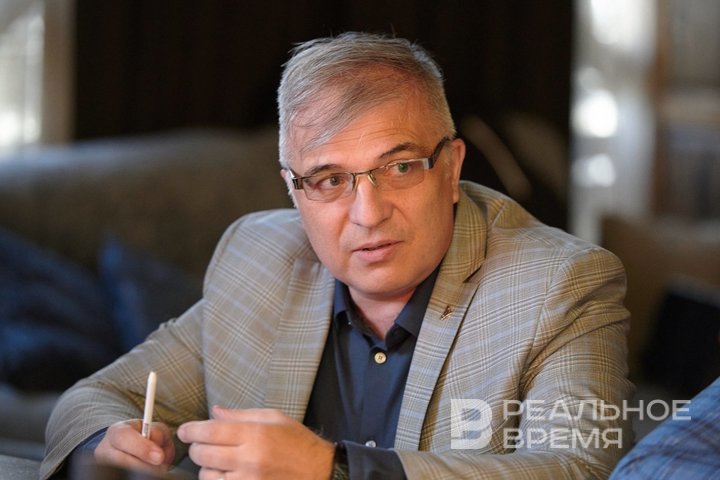
Thus, the increase in demand for products from small and medium-sized businesses, he said, is linked not only to changes in the legislative framework but also to the active stance of large companies and the effective support of the regional procurement infrastructure.
“Large companies are interested in working with local producers registered in Tatarstan. Many of these companies are well-known, have a recognizable presence, and carry an image value,” explained Artur Nikolaev.
Small-scale production comes to the forefront
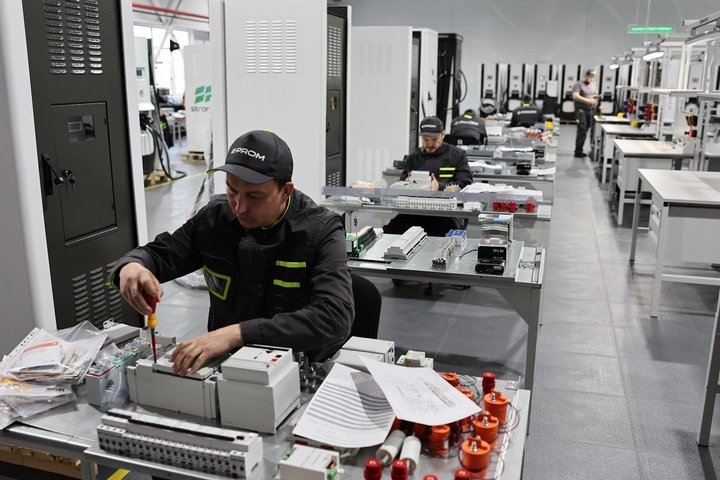
According to Artur Nikolaev, in the first half of 2025, among suppliers to state-owned companies, products related to manufacturing took the leading position among small and medium-sized businesses in Tatarstan.
“The advantage of small companies proved to be their speed of decision-making and high flexibility. When large corporations faced the need to replace European and American brands, entrepreneurs were able to respond in time and organize the supply of alternative equipment, often of Chinese origin. This factor played a key role in the growth of procurement volumes of products from small and medium-sized businesses in 2023–2024,” noted the Deputy Chair of the Chamber of Commerce and Industry of the Republic of Tatarstan.
However, the effectiveness of interaction between major market players and small producers is linked not only to the ability to respond quickly, but also to the capacity of small companies to assume risks, offer innovative solutions, and develop unique technologies, he noted.

The structure of Russian small and medium-sized businesses, according to the expert, is characterised by a focus on small-batch production, which allows them to produce exclusive items and meet specific client needs. This plays a decisive role in a context where Russian manufacturers are forced to seek substitutes for foreign goods.
“This is also reflected in the growing number of companies interested in joining the Registry of Product Manufacturers under Resolution 719, where the entry point is the system of Chambers of Commerce and Industry,” added Nikolaev.
At the same time, experts point to the need to improve the quality of products and develop competitive domestic technical solutions. Only in this way will small and medium-sized enterprises be able to strengthen their positions in the Russian market and successfully compete with foreign counterparts, they believe.