Under what conditions driverless vehicles to appear on the roads of Kazan
Rifkat Minnikhanov has stated that legal issues must first be resolved

Rifkat Minnikhanov has announced that driverless cars in Tatarstan will not yet appear on public roads due to unresolved legal issues. Although the region has been testing the technology since 2018, full-scale implementation is hindered by the lack of dedicated infrastructure and clear legislation. At the same time, the Deputy Minister of Transport of Russia named 2030 as the tentative date for the mass launch of driverless vehicles in the country. Read more in Realnoe Vremya’s report.
Driverless cars were expected to be introduced on Kazan’s roads back in 2019
Director of the Republican Institution Road Traffic Safety Rifkat Minnikhanov told Realnoe Vremya about the prospects for the appearance of driverless cars on the capital’s roads.

At the same time, according to him, the matter concerns even such driverless vehicles as those operated in Innopolis, when an engineer-tester is present in the car, monitoring the journey and other processes.
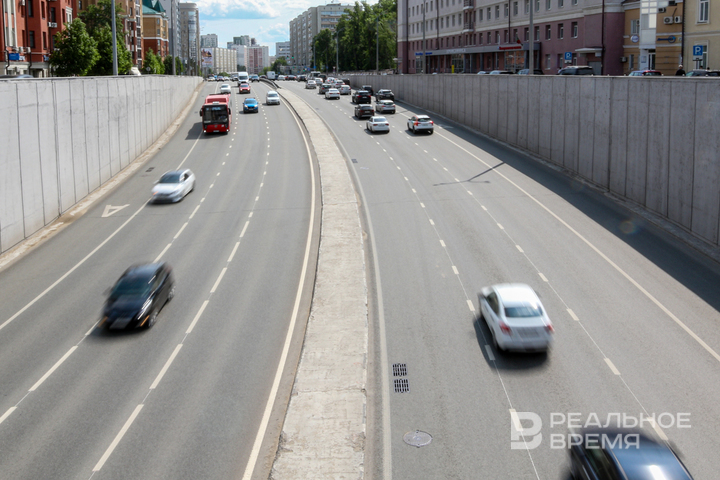
It should be recalled that since 2018 Tatarstan has served as a pilot region for testing driverless transport vehicles. The first driverless taxis were launched in Innopolis, where joint efforts by the corporation and the city continue to fine-tune operating processes. In 2019, the press secretary of the head of Tatarstan, Liliya Galimova, announced that the introduction of driverless vehicles on the streets of Kazan had been suspended due to insufficient infrastructure and heavy road congestion.
In the same year, 2018, deputies of the State Council of Tatarstan declared their intention to develop a draft law concerning the introduction of innovations in the transport sector. Discussion of the document was planned to begin in 2019; however, concrete steps followed only in 2020, when the Committee on Economy, Investments and Entrepreneurship drafted a resolution on the development of innovative technologies in transport and the support of the relevant market segments. The document emphasised the need to modernise the road network, including improving the condition of surfaces, markings and road signs, as well as introducing state support measures.
The head of the drafting of the resolution, deputy Marat Galeev, stressed that the proposed document was of a framework nature, but was important for the further advancement of the idea. According to Galeev, a full legal basis was to be formed by 2022.
“The main problem, as in other countries, is determining liability in the event of an accident involving a driverless vehicle. In addition, for driverless cars to operate, appropriate infrastructure is required — roads equipped with the necessary sensors. The process is moving forward, but not as quickly as one would like,” Galeev told the journalist.
In addition to a legal framework, infrastructure is needed
It should be recalled that at the St. Petersburg International Economic Forum 2025, the deputy minister of transport of Russia announced that driverless cars would appear on the roads by 2030. Experts interviewed by Realnoe Vremya stated at the time that before they appear, it is necessary to provide infrastructure in the form of charging stations, special beacons for the vehicles to navigate by, and dedicated markings for driverless cars. But most importantly, it is essential to create the regulatory and legal framework that will answer the question — whether to hit the elderly pedestrian or veer off the road.
“At present, specialists do not have a clear understanding of how driverless cars will be able to operate under real urban traffic conditions, said deputy head of Kazan’s ASUDD, Yevgeny Pyrov.

According to him, existing technologies, including Lidars, may prove insufficiently effective in conditions of heavy traffic and the unpredictable behaviour of other road users. The speaker paid particular attention to the legal aspect of introducing driverless transport.