Russian and tasty: Russian Ministry of Industry develops standard for Russian cuisine
Gastrofestivals will be forced to abandon Georgian khinkali, Uzbek plov, and it is not even allowed to “rename” a burger as a cutlet with a bun
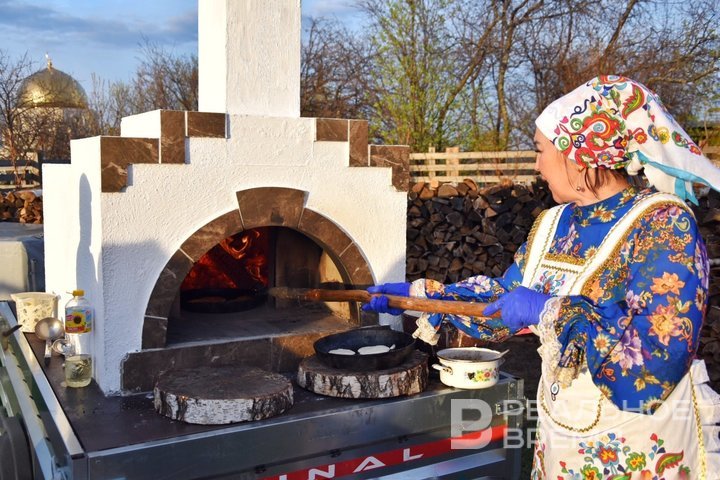
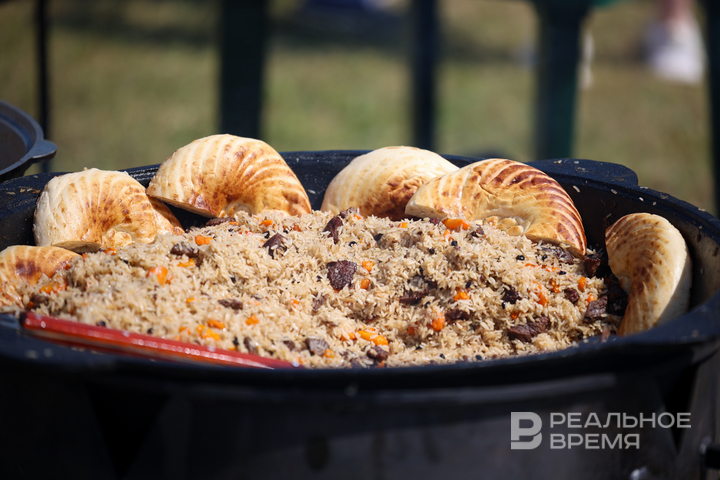
A special group at the Russian Ministry of Industry and Trade has proposed holding a gastrofestival of Russian cuisine. Georgian khachapuri, Uzbek plov, and Italian pizza are banned. Instead, traditional dishes such as shchi, kasha, kissel, and compote are recommended. Artificial integration of local cuisines is also discouraged. Experts interviewed by Realnoe Vremya explained what this could mean for Russia’s gastronomic capital — Kazan.
Russian сuisine festival — in every region
The working group on the promotion of Russian cuisine at the Ministry of Industry and Trade has prepared and sent methodological guidelines to all 89 regions of the country for holding a Russian cuisine festival, along with a list of dishes recommended for inclusion in the event’s menu. The relevant document is available to Realnoe Vremya.
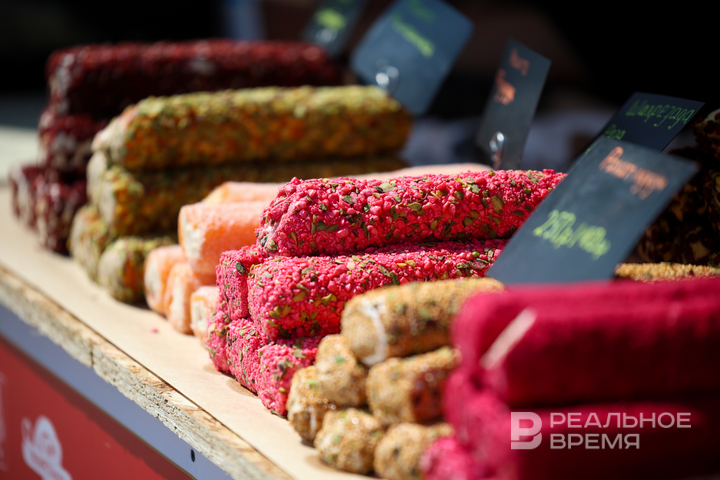
Information about the creation of the working group was published on the Ministry of Industry and Trade portal at the end of May 2025. Its tasks included promoting Russian cuisine both domestically and abroad, as well as analysing foreign practices that have made international cuisines so popular. The deputy minister Roman Chekushov was chosen as chairman. Alongside him were other officials as well as industry participants — the president of the Russian Federation of Restaurateurs and Hoteliers Igor Bukharov, gastronomic journalists, and food festival organisers. In total, 13 people. Notably, no representatives of regional gastronomic or restaurant associations were included.
“The main task of the festival is the preservation and promotion of Russian cuisine as the national cuisine of Russia’s state-forming people, a driving force for the development of the café and restaurant sector within the country, and one of the means of promoting Russia’s image abroad. The motto of the All-Russian Festival of Russian Cuisine: ‘It is not only permissible but necessary to take pride in the glory of one’s ancestors; not to respect it is a shameful cowardice,’” the document states.
The authors of the guidelines note that the key objectives of the festival will be the promotion of Russian cuisine and its recognition as intangible heritage, the increase in the number of venues serving traditional Russian dishes, and the provision of systematic support to food enterprises specializing in Russian cuisine.
“Russian cuisine is a culinary brand representing a collection of dish names, culinary techniques, technologies and recipes, as well as taste and visual characteristics that are consistently associated with Russia in the minds of domestic and international audiences. Over the centuries, Russian cuisine has developed based on the use of local products, the creation of original dishes and culinary methods, and the successful adaptation of gastronomic experiences from the peoples of the Russian Empire, the USSR, and the Russian Federation. Russian cuisine is both a cultural and historical heritage of the state and a cultural phenomenon. More than 190 peoples live in Russia, historically united by Russian cuisine, including the Soviet period of Russian cuisine. In almost every Russian household, syrniki and porridges are prepared for breakfast, borscht and fish soup for lunch, Olivier salad, herring under a fur coat, and aspic for the New Year’s table, pancakes across Russia for Maslenitsa, and in autumn cabbage is fermented and cucumbers pickled for the winter,” the document states.
The presented standard is purely advisory and is not mandatory
Dmitry Zhuravlev, co-author of the methodological guidelines, explained the principles behind the document as follows: In the modern world, characterized by processes of globalization and cultural integration, the traditional features of peoples are rapidly disappearing. Traditional cuisine plays a key role in preserving cultural heritage, as it is through food products, preparation methods, and eating practices that the rich history of a people is reflected.

However, significant difficulties arose during the preparation process. Such an initiative was being carried out for the first time, which involved addressing a wide range of questions and problems. Despite this, the working group consisted of experienced professionals, researchers, and enthusiasts genuinely interested in the development of Russian cuisine. It was precisely thanks to the professionalism and enthusiasm of the participants that the obstacles were overcome.
Zhuravlev clarified that the presented guidelines are not mandatory. At the same time, the All-Russian Festival of Russian Cuisine requires the compulsory presence of traditional Russian dishes, prepared from local products and in accordance with centuries-old traditions. Thus, the guidelines are aimed at preserving the authenticity of Russian cuisine and countering external influences.
According to the document, these guidelines apply to all gastronomic events without exception that are carried out with state support. This includes both financial and informational support.
Ministry of industry to push back gently against the dominance of Italian and Georgian eateries
The authors of the document cite the displacement and dominance of European cuisines in Russia as the reason for such a decision. According to the compilers, as of 2025, Russia has more than 200,000 food service enterprises, of which less than 1% are designated as “Russian cuisine” or “cuisines of the peoples of Russia.” Accordingly, the overwhelming majority of establishments (99%) follow foreign concepts — Italian, Georgian, Greek, Mexican, and so on — or are presented under the vague label of “author’s cuisine.” The authors are confident that all of this became possible due to Western expansion linked to the collapse of the USSR.
“In the modern world, national cuisine is an element of a state’s domestic and foreign policy, a so-called ‘soft power’ that helps extend the influence of the state associated with that cuisine. The dominance of foreign cuisines and the critically low presence of Russian cuisine in Russia indicate a high level of foreign influence and the impact of other countries’ cultures on Russian citizens of all ages, with the native introduction of values and identities of other states through national cuisine,” the authors state.
When holding the festival, it is proposed not to artificially replace the concepts of “Russian cuisine” and “cuisines of the peoples of Russia.” That is, regional adaptations such as “Voronezh cuisine,” “Vologda cuisine,” “Suzdal cuisine,” “Rostov cuisine,” etc., or terms specifying a territory or geography — “Arctic cuisine,” “Far Eastern cuisine,” “Baltic cuisine,” “Siberian cuisine,” “Ural cuisine,” and so on — should not be used, the document notes.
As Igor Bukharov, president of the Russian Federation of Restaurateurs and Hoteliers, told Realnoe Vremya, the guidelines apply only to festivals specifically dedicated to Russian cuisine, and no restrictions are imposed on other cuisines. In other words, a gastronomic festival featuring Tatar cuisine will not be prohibited.
In conclusion, the expert noted that the Russian table has developed over centuries and includes diverse regional elements, but it is necessary to establish a clear boundary between traditional and modern cuisine, preserving historical heritage while ensuring the industry’s successful development in the future.
At the festival, Mexican tacos, Italian pizza and carpaccio, Thai tom yum, Japanese ramen and sushi, American burgers, and so on will be banned. Foreign sauces, such as soy sauce and mulled wine spices, are also disfavoured. It is prohibited to “Russify” familiar dishes — writing “cutlet with a bun” instead of burger is unacceptable. Nor is it allowed to diminish the significance of dishes — for example, mead should be referred to only as “drinkable honey” or “fermented honey.”
Festival organisers will be keeping a close eye on those using Great Russian specialties — Tambov ham, Crimean onions, Belgorod condensed milk, Far Eastern pollock, and “Siberian pine nuts.” Incidentally, rice, lemon, tea, coffee, and some spices are allowed. Here, credit goes to the Great Silk Road, which passed through Russia.
At the same time, the authors have compiled a list of permitted products for the Russian gastrofestival.
- Soups: Ukha, shchi, kalia (fish soup cooked in cucumber brine), rassolnik, borscht, solyanka, ushnoe (something between a thick soup and a stew), chicken noodle soup, mushroom, pea, buckwheat, milk-based, and soups with offal.
- Hot Dishes: Porridges, fried potatoes, skoblyanka, roast, Beef Stroganoff, rolled meat, poultry and fish, chopped beefsteak, cutlets.
- Pies: These are to be prepared, naturally, in an oven. Allowed varieties include pies (open and closed), pirozhki, kurnik, kulebyaka, rybnik, vatrushka, shanga, rasstegai, or traditional open pies from Karelian cuisine — kalitki.
- Beverages: All of this can and should be accompanied by tea, sbiten, vzvar, mors, kvass, lemonade, or rosehip drinks.
- Sweets: Gingerbread with spices, kovrizhki, vatrushki, sochni, shangi and kalitki with sweet fillings, levashniki (fried pies with jam or other sweet fillings), sweet pies, oatmeal kissel with additions, berry kissels, and rum baba.