After inflation: how Central Bank’s policy will change upon reaching 4% and which risks will remain
An expert on Gref’s statement: a strategic signal to the market and the regulator from the country’s largest financial institution
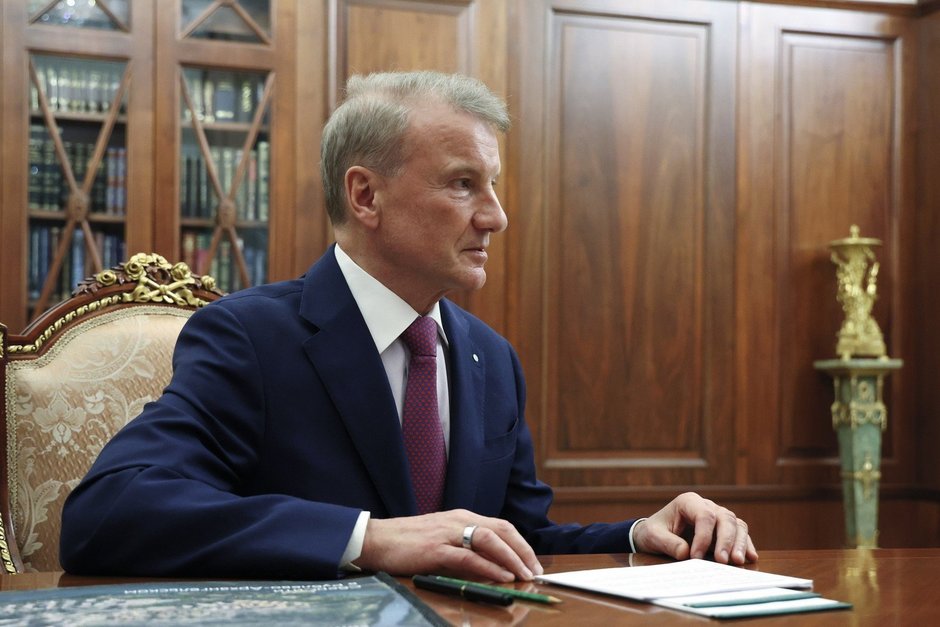
A reduction of the key rate in Russia to 14% by the end of the year is insufficient — the economy may revive at 12%, said Herman Gref at the Eastern Economic Forum. He pointed to “technical stagnation” in the second quarter and the need to take measures to avoid a recession. According to him, the credit portfolio will be able to move to sustainable growth in the second half of the year if the rate is cut by at least 200 basis points. Read details on what the head of Sberbank sought to convey in his speech and the risks he warned about are analysed in a column for Realnoe Vremya by digital economist Ravil Akhtyamov.
Russian economy has entered a stage of “technical stagnation”
Reaching the target inflation level of 4% by 2026, as forecast by the Bank of Russia in its baseline scenario, will become an important milestone in the country’s economic policy. Herman Gref’s speech at the Eastern Economic Forum (EEF) has added relevance to this discussion, highlighting the complexity of the current economic situation. The head of Sberbank stated that the Russian economy entered a stage of “technical stagnation” in the second quarter of 2025, while July and August show “symptoms that we are approaching zero growth.” This statement underscores the need for a timely exit from the managed economic cooling.
The next meeting of the Central Bank’s board on the key rate will take place on 12 September. Ahead of this event, Gref presented a clear forecast for the key rate: “According to our internal year-end estimates, the rate will be around 14%. Is this sufficient for the economy to begin reviving? In our view, it is not, and at current inflation levels, the rate at which one can expect economic revival is 12% or lower.” He also pointed to a specific condition for a recovery in lending: a reduction of the key rate by at least 200 basis points (2 percentage points), which would allow the credit portfolio to move to “sustainable growth” in the second half of the year.
An important aspect of Gref’s speech was the forecast for the ruble: “According to all our estimates, the exchange rate should weaken by the end of the year, which will reduce risks for exporters and the budget.” He linked this weakening to lower interest rates and a possible reduction in the Central Bank’s participation in the currency market within the framework of “mirroring Ministry of Finance operations.” According to Sberbank’s macroeconomic forecast, the national currency could weaken to 90 rubles per US dollar by the end of the year.
Herman Gref’s forecast for the key rate represents a synthesis of artificial intelligence and expert analysis — a hybrid model that combines the computational power of AI for processing large datasets and generating scenarios with the deep understanding of macroeconomic processes, risks, and the political context provided by Sberbank analysts. Acting as a bridge between the technological and economic spheres, Gref conveys not just a forecast, but a strategic signal to the market and the regulator, based on a comprehensive analysis of all information available to the country’s largest financial institution.
Current trajectory: on the way to 4%
According to the latest estimates by the Central Bank, annual inflation in 2025 will amount to 6–7%, reaching the target of 4% over the following three years. This has been made possible by a strict monetary policy: the key rate was raised to 21% in 2024 and only reduced to 18% in June–July 2025. At the same time, the economy shows signs of slowing: GDP growth in 2025 is expected at 1–2%, and by some estimates — only 0.6–1.2%.
Table: Key macroeconomic indicators according to Central Bank forecasts
Indicator | 2025 | 2026 | 2027 | 2028 |
Inflation, % | 6–7 | 4 | 4 | 4 |
Key rate, % | 18.8–19.6 | 12–13 | 7.5–8.5 | 7.5–8.5 |
GDP growth, % | 1–2 | 0.5–1.5 | 1.5–2.5 | 1.5–2.5 |
Reaching the target inflation level of 4% will allow the Bank of Russia to shift from a tight to a neutral monetary policy. According to the regulator’s baseline scenario, the average key rate will be 12–13% in 2026 and 7.5–8.5% in 2027–2028, marking a transition to a policy that neither stimulates nor restrains the economy, creating conditions for balanced growth. As part of this transition, the Central Bank will continue to use communication as a tool for managing expectations, providing clear signals about its plans to anchor inflation expectations at 4%. This is especially important given that inflation expectations among households and businesses remain elevated — at 13.5%. The gap between the number of companies expecting price increases and decreases reaches 19 percentage points, and currently, enterprises’ price expectations are around 4.5%.
Achieving the inflation target will also enable the regulator to devote greater attention to structural economic issues, including boosting labour productivity, supporting investment activity, and facilitating the reallocation of labour resources across sectors. At this new stage, significant risks remain in monetary policy. The geopolitical environment continues to be a source of uncertainty — the Central Bank takes into account the risks of tightening sanctions, possible declines in oil prices, and escalating trade tensions. Fiscal policy continues to exert pro-inflationary pressure, and changes in its parameters may require adjustments to monetary policy. In a pro-inflation scenario, this could necessitate maintaining the key rate at 14–16% in 2026 instead of the planned 12–13%.
Of particular concern are unanchored inflation expectations among households and businesses, which remain sensitive to price changes and could lead to a sustained deviation of inflation from the target. In a risk scenario, the Central Bank considers the possibility of a global financial crisis comparable to that of 2007–2008, which could temporarily raise the key rate to 16–18% in 2026 and even to 18–20% in 2027. An additional challenge is the imbalances in financial markets of developed countries, which could indirectly affect the Russian economy through trade and financial flows.
Alternative development scenarios
The Central Bank has developed four scenarios for the economy for 2026–2028, each of which assumes a different trajectory for the key rate.
Table: Economic development scenarios and key rate forecasts
Scenario | 2026 | 2027 | 2028 | Main conditions |
Baseline | 12–13% | 7,5–8,5% | 7,5–8,5% | Current sanctions maintained, gradual economic cooling |
Disinflationary | 10,5–11,5% | 7,5–8,5% | 7,5–8,5% | Active growth in investment and productivity |
Pro-inflationary | 14–16% | 10,5–11,5% | 8,5–9,5% | Tightening of sanctions, decline in oil prices |
Risk | 16–18% | 18–20% | 10–11% | Global financial crisis, sharp drop in oil prices |
Reaching the target inflation level of 4% by 2026 will be an important achievement for the Bank of Russia, but not the final point in the implementation of monetary policy. As Herman Gref noted, the regulator will need to find a balance between controlling inflation and supporting economic growth, which currently shows signs of stagnation.
Gref’s comments at the EEF highlight the complexity of the choices facing the Central Bank: on one hand, the need to cut the rate to stimulate the economy (to 12% or lower); on the other, the risks of accelerating inflation. His forecasts and warnings underscore that even after achieving the target inflation level, the regulator will have to manage monetary policy amid multiple challenges — from fiscal pressures to geopolitical instability.
Under the new conditions, the success of monetary policy will be determined not so much by the Central Bank’s ability to achieve target inflation levels, but by its capacity to maintain stability amid ongoing external and internal uncertainty. As noted in the Key Directions of the Unified State Monetary Policy, “the Bank of Russia’s policy under any scenario will be aimed at returning inflation to 4% and ensuring its stable anchoring near this level.”