How Tatarstan can become a trade hub between Russia and India
In the current economic conditions, the republic can take on the role of a testing ground for new interaction mechanisms

Amid a fundamental restructuring of international economic relations, Tatarstan has a unique opportunity to become a key trade hub between Russia and India. This role is particularly relevant in addressing the problem of accumulating non-convertible Indian rupees by Russian exporters and overcoming a range of foreign trade restrictions, believes digital economist Ravil Akhtyamov. More on how the republic, with its developed financial infrastructure and experience in international economic cooperation, can serve as a testing ground for new interaction mechanisms is explained by the expert in an op-ed for Realnoe Vremya.
Strategic positioning of Tatarstan
Tatarstan's foreign trade turnover in 2024 amounted to $16.2 billion, which is 12.2% more than a year earlier. The republic cooperates with 136 states, which demonstrates its significant potential for the development of international economic cooperation.
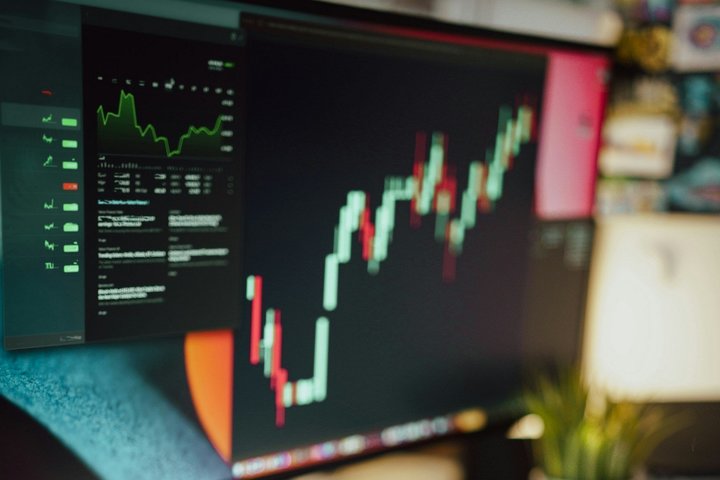
The problem of accumulation of Indian rupees by Russian exporters arose against the background of a significant trade imbalance between the two countries. The volume of bilateral trade reached record levels, with more than 90% accounted for the supply of Russian products, mainly mineral raw materials. Exports in the opposite direction were several times smaller, which led to the accumulation of significant amounts of Indian rupees in the accounts of Russian companies.
Table 1: Dynamics of Russia–India Trade
Indicator | 2022 | 2023 | 2024 |
Total trade turnover | $35 bn | $65 bn | $70,6 bn |
Russian exports to India | $32,5 bn | $60,9 bn | $65,7 bn |
Imports from India to Russia | $2,5 bn | $4,1 bn | $4,9 bn |
Trade balance | +$30 bn | +$56,8 bn | +$60,8 bn |
Source: Ministry of Commerce and Industry of India
According to Bloomberg, in the first half of 2025, the trade turnover between Russia and India reached $69.2 billion.
Solving the problem of rupee balances: the role of Tatarstan
Creating a clearing mechanism and a base exchange rate. Tatarstan has significant potential for testing a pilot mechanism of clearing settlements between Russia and India. The republic’s banking sector, which has experience working with the Chinese yuan as the sole currency of the BRICS countries, could serve as a platform for introducing settlements in national currencies. According to Indian financial experts, a key element of such a system could be a base exchange rate of the ruble to the rupee, established by mutual agreement between the Bank of Russia and the Reserve Bank of India. This approach would create a sustainable mechanism for mutual settlements, minimizing currency risks and dependence on dominant currencies.
An additional factor in the development of bilateral relations is the integration of national payment systems — Russia’s Mir and India’s RuPay. This measure would contribute to a significant increase in both wholesale and small-scale trade, as well as simplify financial transactions between sellers and buyers on the marketplaces of the two countries.
Investing rupee balances in Indian assets. One of the strategic solutions for utilizing accumulated rubles and rupees is the creation of effective mechanisms to reinvest these funds into the Indian economy. In this context, Tatarstan, with its successful experience in managing regional funds and development institutions, could serve as a pilot region for establishing a joint Russia–India investment fund.
Such a fund, managed on a parity basis, would allow the conversion of “frozen” currencies in settlements into productive assets. Its investment strategy could focus on financing projects in sectors of high priority for both India and Tatarstan, representing mutual interest: the digital economy, pharmaceuticals, petrochemicals, engineering, and IT infrastructure.
This approach would address several issues at once: ensuring targeted and efficient use of accumulated rupees, providing Russian businesses with new growth opportunities and access to the expanding Indian market, and serving as a source of direct investment and technology for both India and Tatarstan. In this way, the financial instrument would become a driver for further deepening economic cooperation.
Diversifying exports to India
Achieving a balanced trade turnover between Russia and India is a strategic task, the key to which lies in increasing non-commodity exports. Tatarstan, with its diversified industrial base, has a unique potential to become one of the leaders in this process and secure its own niche in the rapidly growing Indian market.
This goal is fully aligned with the priorities of the republic, outlined in its Export Development Strategy, where the main focus is on the supply of high value-added products.
This potential can be realised by focusing on several promising areas where Tatarstan’s competitive advantages align with the needs of the Indian economy:
- Mechanical Engineering. Supplying equipment for the oil and gas and chemical industries, automotive components, as well as developing joint production of commercial vehicles (for example, based on KAMAZ) with subsequent localisation in India.
- Petrochemical Products. Exporting not only basic polymers and fertilizers but also high-value processed products: rubbers, specialty chemicals, and finished plastic goods that are in high demand in Indian manufacturing.
- Services and IT. Exporting IT solutions in industrial automation (Industry 4.0), educational services through Tatarstan’s leading universities for workforce training, as well as engineering and construction of infrastructure projects.
Thus, Tatarstan can transform from a participant in trade turnover into a key partner in technological cooperation, making a direct contribution both to the diversification of Russian exports and to ensuring sustainable economic growth in India.
Developing foreign trade under conditions of external trade restrictions: challenges and solutions
The development of Russia–India economic cooperation is taking place under complex external trade restrictions. Experts note that negotiations on creating a bridge between the financial systems of Russia and India have been ongoing since at least the end of 2022; however, their progress is hindered by pressure on the Indian side from Western partners.
For Tatarstan, a pressing task is the development of innovative mechanisms that allow operations under external trade restrictions while simultaneously expanding cooperation with India. A promising solution could be the creation of an international trading platform based on a stablecoin backed by national currencies (ruble–rupee–dirham) and established in a jurisdiction with broad tax incentives, such as the UAE. This approach would leverage the advantages of the Dubai International Financial Centre, with its developed regulatory framework for digital assets, while ensuring the required level of compliance with international standards. The platform could operate on blockchain, providing transaction transparency while maintaining the confidentiality of commercial data, and employ smart contracts for automatic verification of trade restrictions. This would create a secure environment for settlements in national currencies, minimizing the risks of secondary restrictions for trade participants.
Economic restrictions at the current stage, while serving as an important tool of foreign policy, can have long-term effects on the economy of the country against which they are imposed. The consequences of such restrictions include slower GDP growth, limited opportunities for business sector development, job losses, and other factors.
Promising areas of cooperation
Development of transport and logistics infrastructure. The development of the International North–South Transport Corridor provides Tatarstan with an opportunity to become one of its key logistics hubs, thereby eliminating existing trade barriers. The potential of this route is evident: last year alone, trade turnover with CIS countries grew by 4.9%. A powerful catalyst for this process was India gaining operational control over the Iranian port of Chabahar, providing access to the resources of Central Asia and Russia and offering alternative routes to Afghanistan. The main advantage of this route is the radical reduction in distance and logistics costs for cargo between Russia/Central Asia and India/the Middle East, bypassing the Suez Canal. Transforming Chabahar into a key transit hub gives a strong impetus to the entire corridor, creating a multiplier effect and stimulating the growth of non-energy trade.
Creating financial instruments for working with rupees. Tatarstan could become a centre for developing financial instruments to operate with non-convertible currencies. This includes:
- Developing derivative instruments and mechanisms to hedge the risks of currency non-convertibility.
- Organising trading in rupee-denominated instruments.
- Issuing rupee bonds and digital financial assets (DFAs) for Russian and Indian investors.
The implementation of this initiative will require close coordination between the government of Tatarstan, the Bank of Russia, and Indian regulators, as well as active participation from leading banks and exchange institutions. The success of this project will not only strengthen Tatarstan’s position as a financial innovator but also make a significant contribution to the dedollarisation of mutual trade and the creation of a sustainable financial infrastructure between Russia and India.
Deepening industrial cooperation
Against the backdrop of global geopolitical changes and the transformation of logistics chains, many international companies are actively relocating production to India to ensure the resilience of their operations and access to a growing market. This trend creates a unique window of opportunity for deepening Russia–India industrial cooperation through the joint creation of production clusters and value-added chains.
The most promising sectors for cooperation are those where the competitive advantages and strategic interests of both countries align:
- Automotive Industry. Russian manufacturers (for example, KAMAZ) could localize the assembly of commercial vehicles and components, leveraging Indian expertise in parts production and access to third-country markets.
- Pharmaceuticals. Establishing joint production facilities in India for the development and manufacturing of active pharmaceutical ingredients and finished drugs would combine Russian scientific developments with India’s large-scale production capacities and regulatory capabilities.
- Information Technology.Cooperation in IT solutions for industry, cybersecurity, and outsourcing would bring together Russian engineering potential with India’s well-known software development expertise.
As rightly noted in Tatarstan’s Export Development Strategy, a key role in this process is assigned to mechanical engineering and equipment manufacturing. The republic’s industrial potential, in particular its expertise in machine-tool construction and the production of oil, gas, and chemical equipment, could serve as an ideal foundation for forming long-term alliances with Indian partners, aimed not only at domestic markets but also at exports to third countries.
Strategic perspective
Tatarstan has every opportunity to become a trade hub between Russia and India, while simultaneously addressing the issue of accumulated rupee balances and ensuring compliance with external trade restrictions. This requires systematic work in several areas:
- Establishing pilot clearing settlement mechanisms based on Tatarstan’s banks.
- Developing investment mechanisms for allocating rupee balances into Indian assets.
- Diversifying exports from Tatarstan to India, particularly in non-commodity goods and services.
- Developing transport and logistics infrastructure.
- Creating financial instruments for working with non-convertible currencies.
The implementation of these initiatives has the potential not only to alleviate the issue of rupee accumulation but also to elevate Russia–India economic cooperation to a qualitatively new level, laying the foundation for sustainable growth in mutual trade and investment. Tatarstan is poised to become a key element of this system, enhancing its status as a financial and trade hub between the two countries. The republic’s role could include functioning as a pilot region, initiator, and testing ground for new interaction mechanisms, fully aligning with its ambitions and existing competencies. A crucial condition for success will be close coordination of efforts with Russia’s federal authorities and partners in India.