The National Library of Tatarstan Began Celebrating Its 160th Anniversary
The funds of the National Library of the Republic of Tatarstan house about 200 “contemporaries” of the main book depository of Tatarstan.
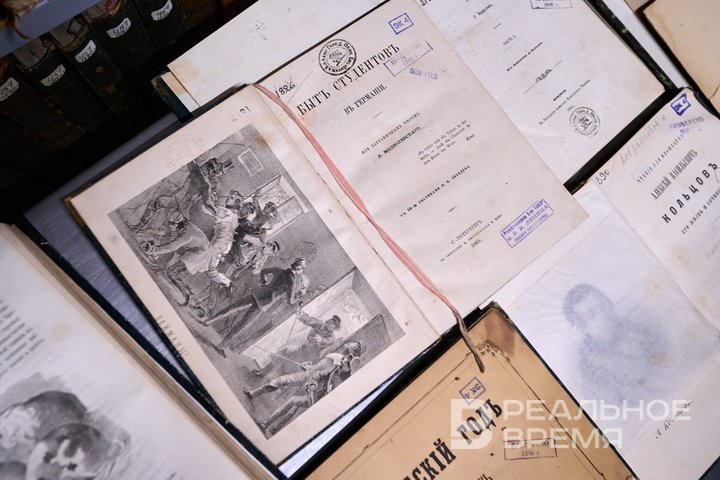
The National Library of Tatarstan has launched a series of events dedicated to the 160th anniversary of the institution. In the Universal Hall, publications from the library's collection that were first published in 1865 have appeared. Librarians have specially showcased publications that literally came out 160 years ago. Our article delves into what the literary world was like in the mid-19th century.
1865 was the year of Ostrovsky, Tolstoy, Mark Twain, and Jules Verne
The first public city library in Kazan opened on January 10, 1865, founded on Ivan Vtorov's collection of 1,908 volumes, which his son donated to the city in 1844. What was written or published in 1865? For example, Ostrovsky's works include the comedies “Voevoda” and “Na Boikom Meste," as well as “Scenes from Moscow Life” and “Puchina.”
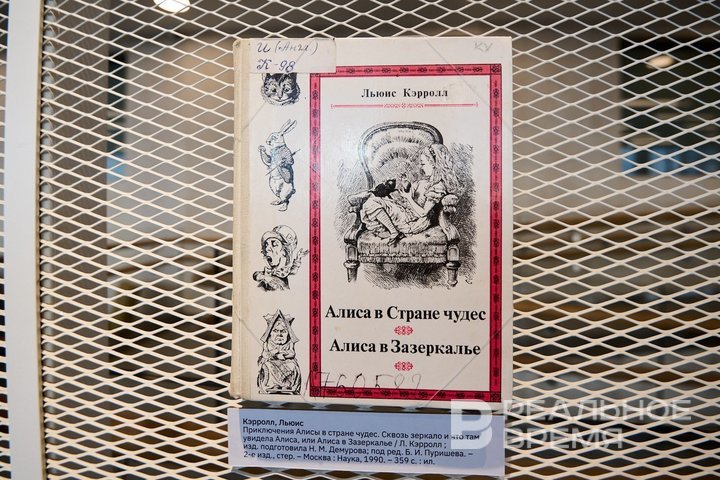
That same year, Lewis Carroll's “Alice's Adventures in Wonderland” and Nikolai Leskov's “Lady Macbeth of the Mtsensk District” were first published. Jules Verne released “From the Earth to the Moon in 97 Hours and 20 Minutes.” “Silver Skates," brilliantly filmed in Russia in 2020, and Henrik Ibsen's “Brand” also appeared.
Magazines such as “Izvestia of the Imperial Russian Geographical Society” and “Knizhnik” were published during this period. Mark Twain published the story “The Celebrated Jumping Frog of Calaveras County” and gained popularity.
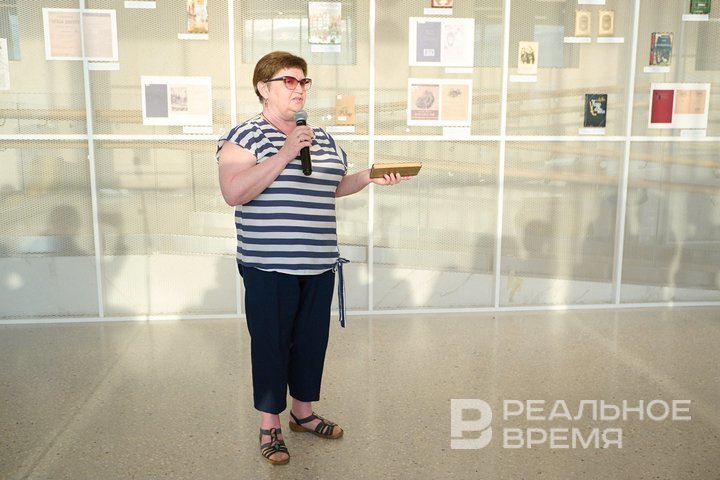
In that year, the first and second parts of the first volume of the novel “War and Peace” by Leo Tolstoy appeared in the magazine “Russkiy Vestnik” under the title “1805.” This was the time when Pushkin emerged from some oblivion to become “everyone's favorite.” A lecture on this topic was delivered by Rinat Bakirov, a researcher from the Institute of Russian Literature, at the opening of the exhibition in the Universal Hall.
“We have some authors who were published multiple times. We took upon ourselves the right to choose which book cover to feature in the exhibition, trying to choose the older ones," noted the library director, Madina Timerzyanova. “The manuscripts themselves are just an excuse to talk about the context in which they appeared. Without this knowledge, we would see the picture but not understand its depth.”
The anniversary has prompted librarians to re-evaluate the funds, reflecting on what has been done, what hasn't, and what could be done differently, she indicated. More events are expected for the 160-year-old library.
And second-tier literature
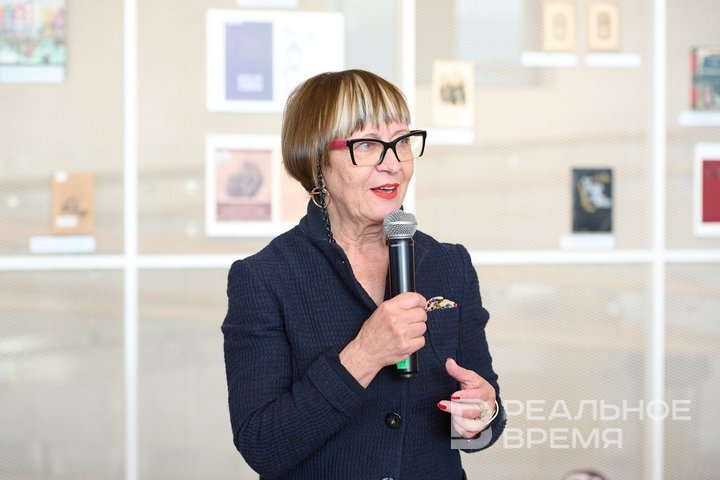
“The public library in Kazan opened a bit later than in other cities," noted Svetlana Borodina, professor at the Kazan Institute of Culture and editor-in-chief of the magazine “Mir Iskusstv," while pointing out that previously gymnasium students and university students could not visit libraries, and they didn't even have Pushkin, for example. This hunger led to the emergence of private libraries.
In 1865, “Brul” by the incredibly prolific Józef Ignacy Kraszewski or the Hungarian novel “When We Grow Old” by Mór Jókai were also published. That is, it's not just first-tier literature, but also less noticeable publications, yet no less remarkable.
“It's similar to studying geography by the highest peaks, like Mount Everest, K2, Kazbek, Elbrus, while many other hills and mountain ranges didn't exist," Borodina pointed out, adding that 7.5 thousand people were writing in the 19th century, so she decided to collect literature of the “second tier," such as Sleptsov, Arzybachev, and others.
Now to the basements!
“Realnoe Vremya” was offered to go down to the basement, to the department of rare books and manuscripts, to see books that were actually published in 1865. The librarians organized a mini-exhibition right in the repository.
For example, the press secretary of the library, Yulia Gogoleva, was very interested in “Life of Animals” by Alfred Brehm, the director of the Hamburg Zoo, and “Student Life in Germany” by Lev Modzalevsky, with detailed illustrations.
Interestingly, when the library opened in 1865, it didn't have a single book written in Arabic script. In 1906, it acquired a branch called “Kutuphanai Islamiya” on Paris Commune Street, 20 (where the Karimov brothers' printing house was located), and they began collecting books in “iske imlya.”
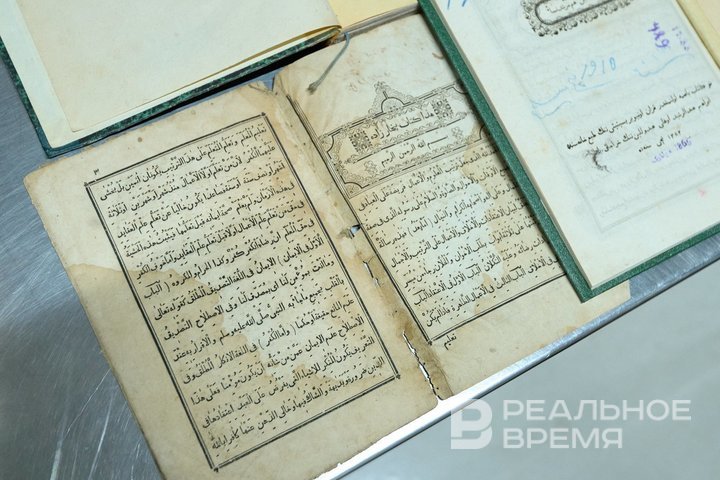
There are about 200 copies in the rare books fund that were published in 1865, and approximately the same number that are older. Displaying them in a public space threatens their preservation. The oldest book in the National Library of the Republic of Tatarstan was published in 1700 and is called “Nomenclator.” It is kept in a safe. Meanwhile, many books have been scanned and can be read on the library's website.