Karina Musina: «An underground city was preserved at the Alexandrov factory»
Honored architect of the republic spoke about industrial heritage
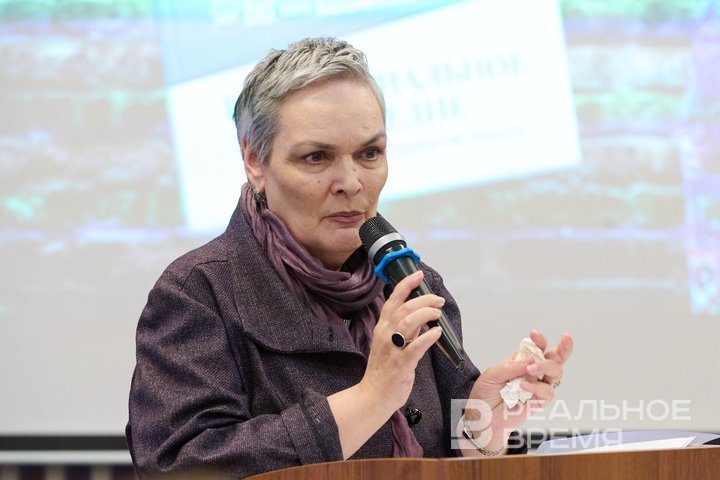
Industrial heritage is as important a part of the historical landscape as palaces, manors, mosques, and churches. This was stated by the honored architect of the Republic of Tatarstan, Karina Musina, presenting the book «Industrial Heritage in the Cultural Space of Kazan» at the Pushkin Cultural Center. Her topic is not only the preservation, but also the adaptation of former industrial sites for modern needs.
Where there are factories, there is gas lighting and transport
«I worked as an architect after graduating from the institute, and then life brought me to be the chief specialist at Giproniiaviaprom. Perhaps it was the best time in my life,» began the story Karina Musina, recalling her work in the design and construction organization of the industrial cluster.
Since then, she has been actively studying industrial Kazan: as an architect, cultural scientist, and historian. Her interests are wide — Musina, for example, designed the restoration of the buildings of the Madrasah «Mardzhaniya» and «Muhammadiya», the Youth Theater, the Shalyapin Palace Hotel.
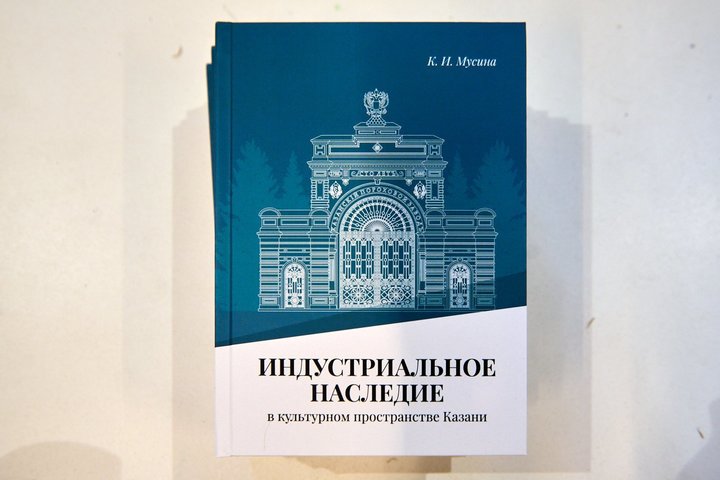
The cover of her book features an author's project for the restoration of the anniversary arch «Red Gate» of 1988. Musina has been preparing the publication on industrial heritage for 8 years. This is her monograph, published in a tiny edition of 100 copies.
The book tells about industrial objects: starting from the second half of the 19th century, when the reform of 1861 led to the rise of industry, factories, plants, and manufactories became the centers of the settlements. This is the era of Kotelov, Alafuzov, Krestovnikovs, Apanaevs, Yunusovs, Utyamyshevs, Apakov. Less famous surnames were also mentioned — Ramm, Sapozhnikov, Libigt, Yakovlev, Sannikov and many others.
Such global changes can be seen, for example, in the Project Plan of Kazan 1874–1885, the first professional plan of the city's land surveying, which indicates its lands, landings, rented houses. Thanks to industrial progress, the construction of a horse tram began in 1869, then a water supply system appeared — by the way, it was in honor of its opening in Lyadsky Garden in 1874 that a fountain was installed.
For the first time, gas began to be used in Russia in Kazan, and its smell was different from gas in other Volga cities. As Chaliapin wrote: «Once again I felt the smell of oil, a smell that for some reason I did not notice on the way anywhere except Astrakhan. But in Kazan, it smelled of oil thicker, which, of course, is not a great advantage of the city, but it was pleasant and sweet to me, like the «smoke of the Fatherland».
In memory of this, until the 1930s, where the «Mazut House» is now located, there were «Nobel's Tanks». And from the gas plant, only a laboratory turned into a communal apartment on Ippodromnaya, 31 remained.
With the growth of the merchant class, theaters, passengers, shelters opened
But industrial heritage is not only factories and plants, noted Musina, who is also a cultural scientist. This includes the Alafuzov Theater, the Ushkova House, the Alexandrovsky Passage, the Gostiny Dvor, and shelters with gymnasiums. This is also the history of scientists — for example, the chemists Kittara, Zaitsev, Mendeleev, Arbuzov. Although tourists, of course, appreciate palaces, churches, and noble estates more, the author writes.
The second chapter of the book is devoted to the present. After the revolution, Musina points out, the «Decree on Land» provoked the plundering of property, but already in 1918, the People's Commissariat of Education put forward «Measures against the Plundering of Art Values». Maxim Gorky initiated the creation of the 30-volume edition «History of Factories and Plants» — only six books were published, since the writer died. In 1964, the Venice Charter for the Conservation and Restoration of Monuments and Sites was adopted.
In 1973, the International Committee for the Preservation of Industrial Heritage (TICCIH) was established. The Nizhny Tagil Charter stated that «buildings and structures intended for industrial activity, the processes and tools used in them, as well as the cities and landscapes in which they are located, along with their other material and immaterial manifestations, are of fundamental importance».
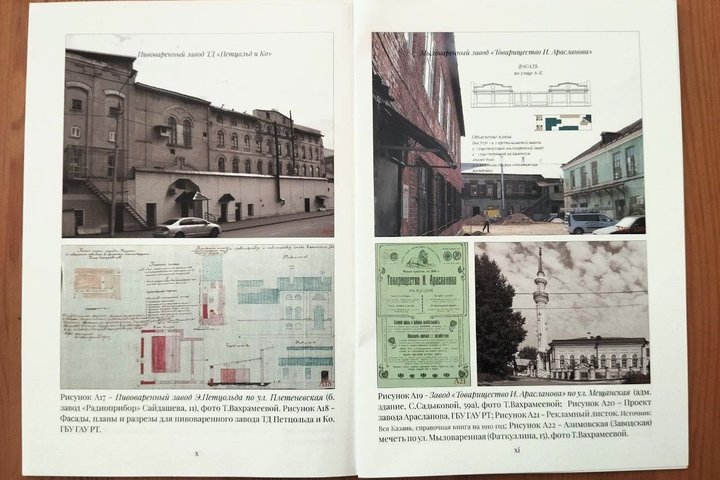
As for the industrialization of the settlements, it is most clearly expressed in Staro— and Novo-Tatar, Pletenevskaya, as well as in Yagodnaya and Porhovaya settlements — in the format of gloomy landscapes.
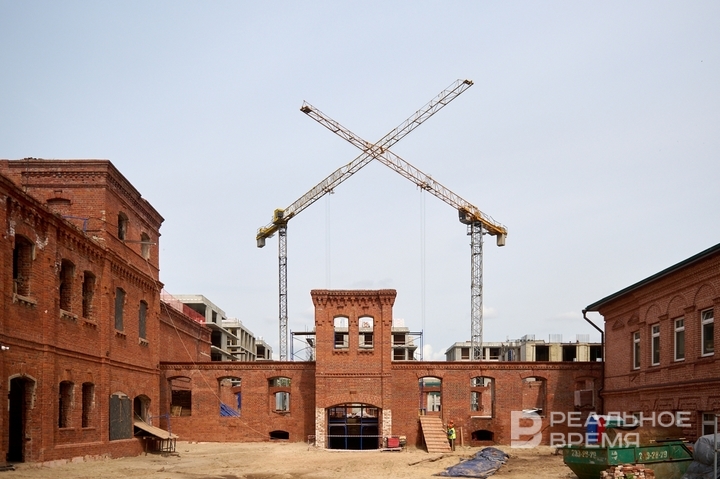
But, for example, the buildings of the Sukonnaya factory in the settlement of the same name have found a new life — the first «IT-park» was located here. Musina recalls that everyone here also wanted to demolish and build two high-rise buildings. But Karina Irekovna's project won and the Sukonnaya was saved. As for the industrialization of the settlements, it is most clearly expressed in the Old and New Tatar, Pletenevskaya, as well as in Yagodnaya and Porhovaya settlements — in the form of gloomy landscapes.
“It was a surprise for the management that the building where the Ekiyat theater was located was a church," the architect recalls the history of the settlement.
The Alafuzov estate on Gladilova will also turn into a “city within a city” not soon. The question of what the buildings of the Fur Factory in the New Tatar will become, which grew out of the productions of the century before last, is still open: the fate of these territories is not discussed as actively as the New Port.
In a small book, there are many interesting and little-known facts. For example, you can learn from it that the buildings on Zaini Sultana, 15 are the soap factory of the Utyaganov brothers. And opposite the Apanaevskaya mosque on Kayum Nasyri, 38, Zigansha Usmanov's soap factory used to work. One of the Yunusovs boiled soap on Tukaya, 108, and Ishak Arslanov on Sadykova, 59.
Not all industrial heritage is protected as cultural heritage
In the same area, the gradually revitalized brewery of the trading house “Heirs of Commerce Advisor I.V. Alexandrov” is waiting for an update. The enterprise is popularly called the Petzold factory in honor of the German industrialist who started brewing in Kazan. But he sold the business to Alexandrov, and it was he who expanded the factory, turning it into one of the most powerful productions in Russia, and Kazan beer gained international fame.
“Underground city was preserved at Alexandrov's factory, at least when we were young," Musina recalled. “Unfortunately, when I was there last time, everything was flooded. And previously, you could go through the underground to Kaban and reach Petzold's factory.”
The historical buildings of the factories of the Krestovnikov brothers will find a new life. The buildings associated with the powder factory have also been preserved — this is the administration, the barracks, the school of cantonists, warehouses, a canteen, and apartments. Experts also recommend walking along Muzykalnaya and Dimitrova streets.
Journalist, deputy director of the Pushkin Cultural Center Mikhail Lyubimov added two excerpts from his films to what was said. One talks about the water intake of the Kazan powder factory, which, after filling the reservoir, ended up on an island. It belongs to Ak Bars Development, and so far the owner is not interested in its development.
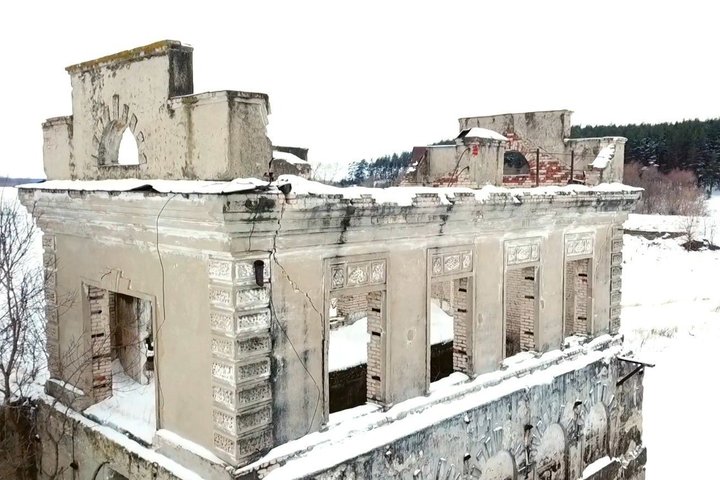
The other excerpt talks about the Soviet heritage — the Deushevskaya and Kiyatskaya hydroelectric power stations, examples of Stalinist Empire style, now standing abandoned on the Sviyaga River. The Kiyatskaya looks especially powerful against the background of the water. In the film, local historian Leonid Abramov shares the opinion that the object can be turned, for example, into a beautiful viewing restaurant. And the author adds — both buildings are not protected objects and are far from Kazan. If something happens to them, public activists will not immediately find out and start ringing all the bells.