Tatarstan residents made online purchases totaling more than 100 billion rubles
Most often they buy food, household appliances, and auto parts
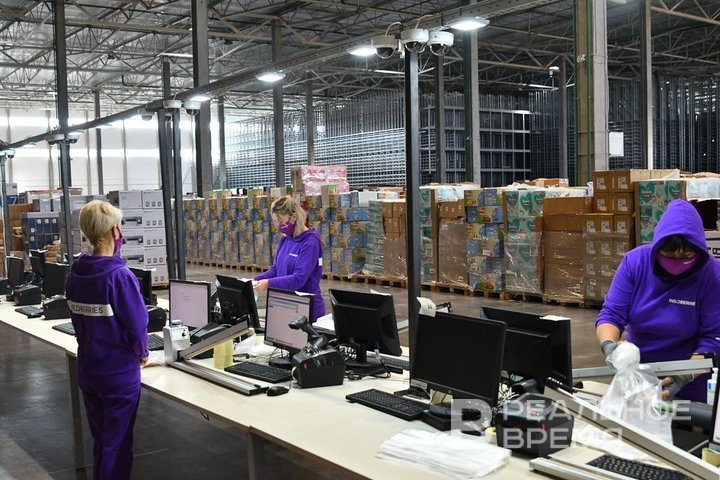
Since the beginning of 2025, the volume of online trade has grown by 36% and reached 5.3 trillion rubles. 2%, or about 106 billion rubles, accounts for Tatarstan. “Despite some slowdown in the growth rate of the number of sellers, which we have observed over the past two years, the market growth ceiling is still very far. In Russia, the share of internet trade at the end of 2024 amounted to about 16%. For comparison, in China — 27.6%, in the United Kingdom — 29.3%. That is, there are no restrictions on the growth of the e-commerce market in Russia yet," said Farid Abdulganiev, the Commissioner for the Protection of Entrepreneurs' Rights under the Head of Tatarstan, to Realnoe Vremya. More details are in the publication's material.
The online sales market started growing even faster
According to the results of the first half of 2025, the volume of online trade amounted to 5.3 trillion rubles, which is 36% more compared to the same period last year. This was reported by the Association of Internet Trade Companies (AKIT). At the same time, the half-year volume already exceeds half of the total annual volume for 2024. According to the same association, it amounted to 9 trillion rubles.
Among the most active regions is Tatarstan, which shares seventh place with the Samara and Nizhny Novgorod regions. Each region has a share of online sales of 2% (about 106 billion rubles, editor's note).

Among the most popular purchase categories are traditionally food and food delivery — this segment accounts for 20%, followed by household goods and furniture, third in popularity are clothing and footwear, electronics and household appliances occupy the fourth place, and closing the top five is the category “auto parts and car accessories.” Note that compared to 2024, the leaders have remained unchanged.
AKIT President Artem Sokolov stated that one-fifth of all purchases fall on online trade, which, in fact, continues last year's trends.
There are enough sellers in Tatarstan, but free niches exist
Over the last 5 years, the number of Tatarstan sellers has increased 216 times — from 321 in 2019 to 71,323 by the end of the second quarter of 2025, said Farid Abdulganiev, Commissioner for the Protection of Entrepreneurs' Rights under the Head of Tatarstan, to Realnoe Vremya. However, as clarified by the press office of the commissioner, this refers to stores, not the number of sellers, since one entrepreneur may have several stores registered.
Over five years, the turnover of Tatarstan sellers increased 265 times, exceeding 80 billion rubles. On average, the annual revenue of each Tatarstan seller exceeds 1.2 million rubles.
— Today, every eighth entrepreneur or self-employed person in the republic works through marketplaces, and for a third of them this is the main income. On average, the annual revenue of each Tatarstan seller exceeds 1.2 million rubles. Tatarstan is one of the few regions with a positive trade balance on the Wildberries marketplace: as of the end of 2024, entrepreneurs of the republic sold through this marketplace 1.5 times more than Tatarstan residents bought. Our sellers occupy first place in sales volume in the Volga Federal District and leading positions in sales volume among all regions of Russia, — noted the business ombudsman.
Despite some slowdown in the growth rate of the number of sellers, which we have observed over the past two years, the market growth ceiling is still very far. In Russia, the share of internet trade at the end of 2024 amounted to about 16%. For comparison, in China — 27.6%, in the United Kingdom — 29.3%. Thus, there are no restrictions on the growth of the e-commerce market in Russia yet.
The potential for increasing the market volume is determined by high demand for quality and exclusive products
Chairman of the Committee for the Development of Digital Technologies at the Chamber of Commerce and Industry of Tatarstan Roman Sukhar emphasized the steady inflow of new players and the diversity of business models, from selling their own products to importing Chinese goods.
According to the interlocutor, the growth of competition is recognized rather as a useful factor stimulating the sector's development, and the potential for increasing the market volume is determined by high demand for quality and exclusive products. Specific restrictions are rather related to the assortment level and consumers' readiness to purchase unique offers than to the number of entrepreneurs.

An important feature of the sellers' market is the absence of significant impact on employment levels. Companies experiencing difficulties in e-commerce easily switch to alternative business areas. Thus, the sector continues to develop organically, complementing the region's economy with new opportunities for entrepreneurship.
Recall that senator from Bashkortostan Oleg Golov proposed to “evict” order pickup points from the first floors of residential buildings. Meanwhile, only in Tatarstan's capital, more than 1.5 thousand such points are located in such premises. Each point can bring about 100,000 rubles per month.