Debt collectors are unprepared: initiative to sell utility debts criticised in Kazan
Iskander Giniyatullin: before considering the possibility of transferring debts to collectors, the system of debt collection must be regulated

Management companies have proposed to the State Duma to allow the sale of citizens’ utility debts to debt collectors — allegedly to help close cash shortfalls. However, the initiative may trigger a wave of aggressive debt collection and create new problems for residents, while the total utility debt across Russia has surpassed 1.5 trillion rubles. In Tatarstan, the proposal was met with scepticism. Iskander Giniyatullin, deputy head of Kazan’s executive committee, expressed distrust of debt collectors, saying: “There have been many unlawful actions.” Read the details in the report by Realnoe Vremya.
Household debts will be transferred directly to collectors
Management companies have appealed to the State Duma and the Ministry of Construction with a request to permit the sale of citizens’ utility debts to third parties, including debt collection agencies. Letters with this initiative were sent to the Speaker of the lower house of parliament, Vyacheslav Volodin, and to the ministry by Lina Tkachenko, Chairwoman of the Council of the Association of Property Management Companies (AKON), reports Kommersant.
In her appeals, she proposes amending Clause 18 of Article 155 of the Russian Housing Code, which currently prohibits management companies from transferring the right to collect utility debts to third-party organisations. Management companies argue that the ability to transfer debts would help reduce cash flow gaps and improve the quality of residential services — particularly in light of rising debt levels across the sector.
According to the government’s housing and utilities development strategy, by the end of 2021 the total debt owed by households and organisations to utility providers exceeded 1.5 trillion rubles. In the first quarter of 2023, the figure reached nearly 900 billion rubles, and by 2024, Russians’ debt for electricity alone had surpassed 340 billion rubles.

Due to a lack of funds, management companies are unable to offer homeowners the volume of routine maintenance required, said Valentina Tugusheva, Deputy Director General of Astrum-Moscow (Granel Group).
At the same time, in June, members of the State Duma Committee on Construction and Housing introduced a draft bill proposing to allow management companies to transfer debts to utility providers (RSOs). Another draft bill — which the State Duma passed in its first reading in December — proposes to allow debt collection without court proceedings, based solely on a notary’s executive endorsement.
However, Sergey Sergeev, head of the legal dispute resolution practice in housing and property management at the law firm Yakovlev & Partners, warns that lifting the ban could lead to debts being handed over to unscrupulous collectors and pose risks for homeowners. He noted that it was precisely for this reason that the ban on assigning the right to claim utility debts to third parties was introduced several years ago.
A debt pit worth 9 billion
Last year, overdue utility debt in Tatarstan reached a staggering 9.971 billion rubles, as was revealed during a Cabinet meeting dedicated to the results of the heating season.
First Deputy Minister of Construction, Architecture and Housing of the republic, Aleksey Frolov, stated that among the debtors are a significant number of wealthy citizens who own multiple rental properties and fall into the category of major debtors — with debts starting from 300,000 rubles.
- In this regard, Frolov believes it is reasonable to consider selling debt portfolios to collection agencies, which, in his view, “are capable of working with debts in a civilised manner.”
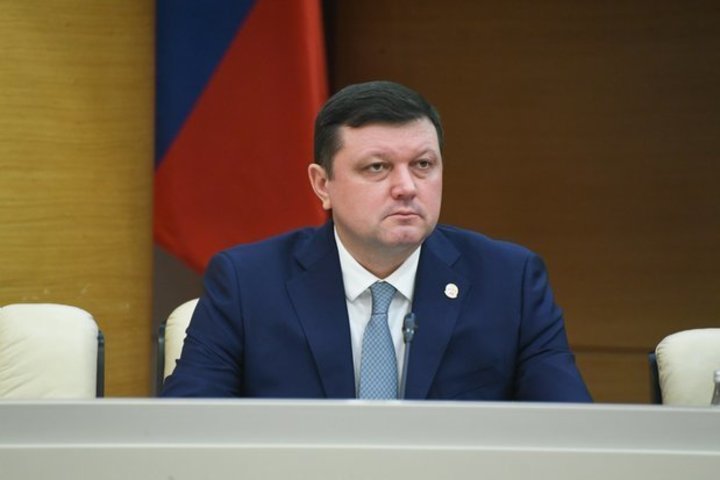
Despite the overall debt burden, the republic demonstrates strong payment discipline. Tatarstan ranks among the top regions in this regard, alongside Altai, and the Orenburg, Tyumen, Lipetsk and Vologda regions. Moreover, for an extended period, the average annual rate of utility bill collection from the population in the republic has not fallen below 98%. As of 1 May this year, the average annual collection rate stood at 99.5%, as emphasised by Marat Aizatullin.
Nevertheless, as of 1 July 2025, Tatarstan implemented a scheduled 17.5% indexation of utility tariffs. Against the backdrop of this increase, Central Bank Governor Elvira Nabiullina noted that “attempts to bypass this logic come at a high cost,” alluding to the need to adhere to economic fundamentals in order to maintain stability.
“Society does not demand that its neighbours repay their debts, and this does not work as a functioning community”
Deputy Head of the Kazan Executive Committee for Housing and Public Utilities and Urban Improvement, Iskander Giniyatullin, told Realnoe Vremya that the issue of non-payments persists to this day.
“Although we record a 98% collection rate every year, the remaining two percent of shortfall still forms a rather significant debt,” Giniyatullin stated.
He emphasised that consumer debt to management companies has reached significant levels, while the companies themselves lack real leverage over residents.
“Collective reasoning doesn’t work in this case. Society does not demand that its neighbours repay their debts, and this doesn’t function as a community,” he added.
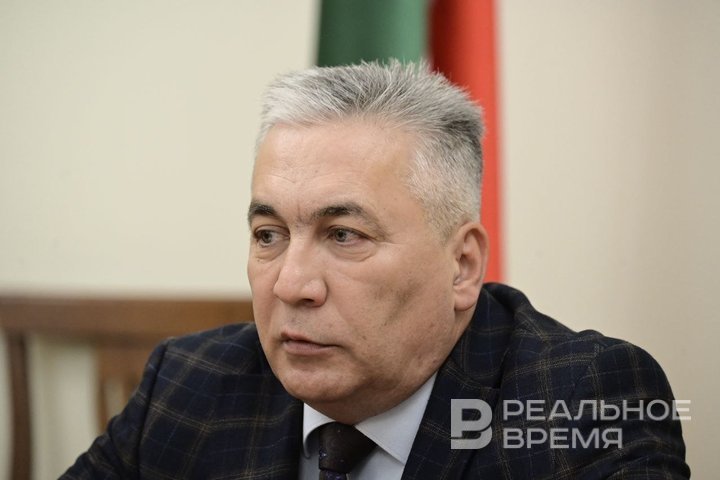
Responding to a question about the feasibility of transferring debts to collection agencies, Giniyatullin noted that the very word “collector” today carries negative connotations.
“There have, unfortunately, been many instances of unlawful or improper actions on the part of collectors,” he stressed.
In his view, before considering the possibility of transferring debts to collection agencies, the system of debt recovery itself must first be properly regulated.
“Their work must first be organised in such a way that they are accountable and controlled, as well as properly regulated,” said the deputy head of the city executive committee.
Giniyatullin expressed concern over potential violations if debts are handed over to collectors: “The scope for their activities would be vast, and accordingly, the potential violations could also be extensive.”
- In this regard, he stated that he does not support the initiative until measures are taken to improve the work of collection agencies and ensure their accountability.