Igor Tsvirko: ‘Modern productions may be fleeting, but the classics are eternal’
A principal dancer of the Bolshoi Theatre, performing the lead role in Zorba the Greek, speaks about the development of global ballet and the ideas for his own productions
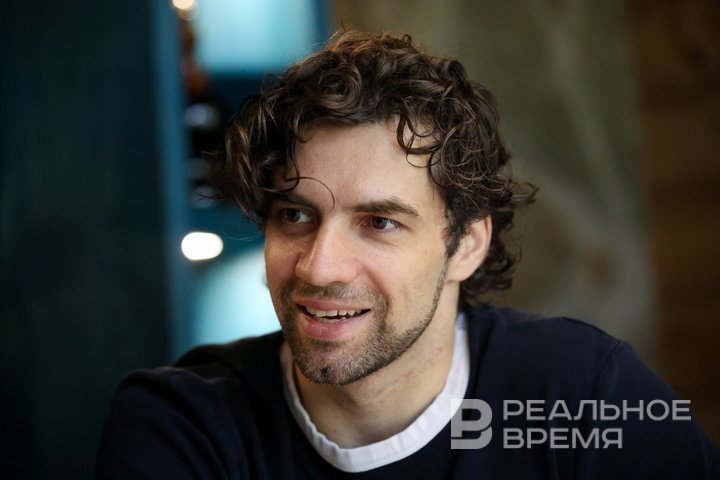
Igor Tsvirko, a three-time nominee for the Golden Mask award and a principal dancer of the Bolshoi Ballet, visited Kazan last week — once again performing the title role in the ballet Zorba the Greek. In an interview with Realnoe Vremya, Igor Tsvirko shares his creative plans — in recent years, he has also taken on the role of producer and has already presented several striking ballet projects to the public. In the near future, he hopes to stage a ballet about Don Juan and a biographical dance production about the life of Pushkin. He also reflects on the role of Zorba and speaks about the Jalil Tatar Academic State Opera and Ballet Theatre, expressing his views on global ballet trends and on whether the classical tradition in this art form should be preserved.
“It was important that our Zorba didn’t become a copy of someone else”
While opening last year’s Nureyev Festival, Lorca Leonidovich Massine spoke about you before the Kazan premiere of Zorba the Greek: “When I saw Igor, I immediately knew — this is Zorba.” How did you approach this role yourself, and what do you see in common between you and this character?
First of all, I’m very flattered by such high praise from the maestro. I’ve been fortunate in my artistic life when it comes to productions and roles. I was lucky here as well: it so happened that I was in Kazan at the right time and met the maestro. When I received the video recording of Zorba the Greek to get acquainted with the material, it was initially hard to grasp how this role would fit my “physicality”, my condition. Of course, I also watched the film with Anthony Quinn. In the end, I was truly inspired — I liked the theme so much!
And when rehearsals with the maestro began, I realised that the role was close to me in spirit. Because Alexis Zorba is a simple man, without obsequiousness. He is open in soul and heart. He is very kind. He is a person of the “here and now”, not thinking about long-term prospects. And at that moment, when we had just begun preparing, this really resonated with me. During the production process, I was amazed at how Lorca Leonidovich was creating this performance — how he was shaping it both dramaturgically and choreographically. I believe he has created a production that will not lose its relevance.
Did you feel a certain responsibility in being the first to perform the title role in the Russian production of this ballet?
To be honest, I hadn’t even thought about that until your question. Now that you mention it, I’m thinking: “Well, yes, that’s true.”
But during the preparation of the production, I wasn’t focused on things like that. What mattered to me was bringing to life the character the maestro wanted to see. It was important to capture the spirit, the personality he had envisioned. Because we all saw how deeply he cared for this production.
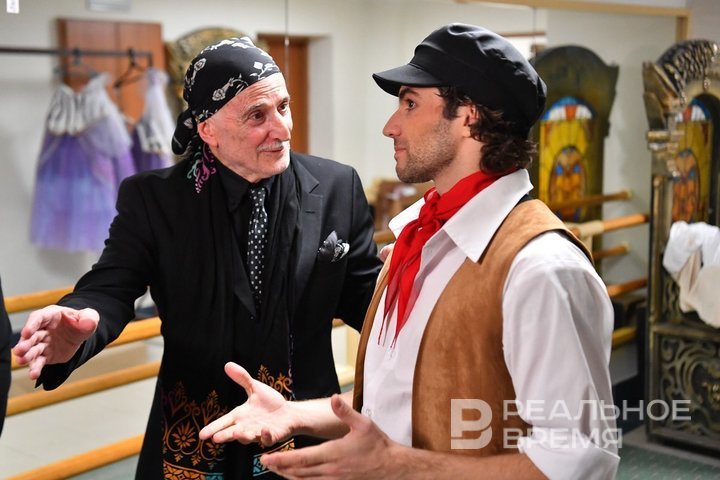
Different performers dance the same role differently. And you mentioned that you were forbidden to watch recordings of Vladimir Vasiliev, Lorca Massine’s original Zorba. But you watched them.
Yes, that’s the approach of Western choreographers. When we were staging Chromaat the Bolshoi Theatre, Wayne McGregor’s assistants also prohibited us from watching any recordings. The idea is to avoid copying anyone. To allow the birth of your own perception of the music and choreography, so that everything is coloured with new nuances.
That was precisely Lorca Leonidovich’s main idea — it was important to him that our Zorba would not become a copy of someone else. That it would be my own interpretation. That’s why I only watched fragments of the ballet performed by Vladimir Viktorovich once I had already clearly formed my own style for this production, when I already had my own vision and understanding of the role. So for me, watching those recordings was purely for reference, and it happened only after my role had already taken shape.
“I enjoy returning to the stage of the Musa Jalil Theatre”
What can you say about our city and our theatre?
Only the kindest and most appreciative words. I truly enjoy returning to the stage of the Musa Jalil Theatre every time, because there’s a warm, friendly atmosphere here — both within the company and in the auditorium. I believe that’s largely thanks to the theatre’s director, Raufael Mukhametzyanov, the ballet’s artistic director Vladimir Yakovlev, and, of course, the artists themselves.
It’s wonderful to have the opportunity to come here, to share my experience, and to see what the dancers here are doing. To meet colleagues, to create something interesting and meaningful — something that stays in your memory and your artistic life.
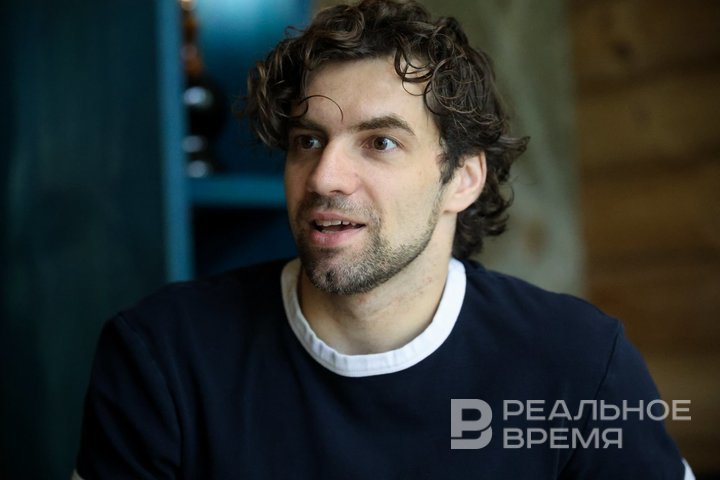
No matter how many times I’ve been in Kazan — I’m always met with loud applause. There’s always a strong exchange of energy between the performer and the audience.
Is the audience different in other cities?
Certainly, it differs. But it is important to understand that this depends on various factors — which production is being performed, which artists are dancing. However, overall, no matter how many times I have been in Kazan, I am always met with enthusiastic applause. There is always a powerful exchange of energy between the performer and the audience.
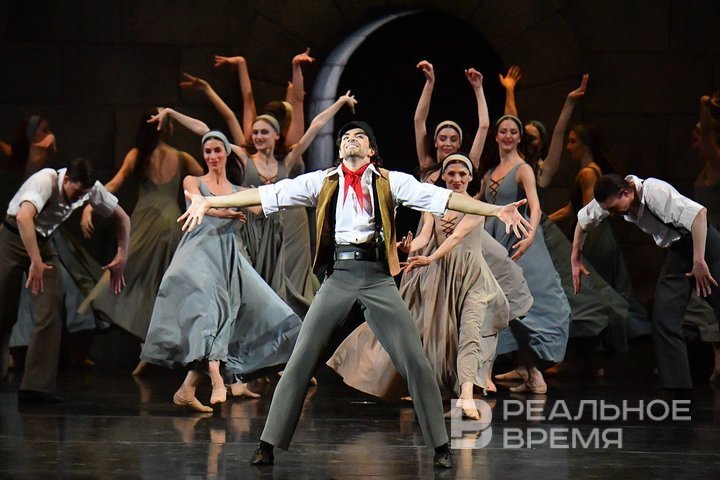
Zorba the Greek is always received with a vigorous ovation. The music itself, and the final dance — the syrtaki — are highlights. It is the cherry on the cake of this production.
“The classics are called classics because they have been tested by centuries, and they will not die”
It is commonly believed that ballet is a rather conservative art form, and that little changes within it. However, many contemporary productions, including yours, show a departure from classical forms. In your view, in which direction is modern global ballet moving today?
Looking at the big picture, classical ballet in America and Europe, unfortunately, is moving towards a more contemporary style. Neo-classicism, contemporary... There are hardly any large-scale classical productions like those performed in Russia — The Sleeping Beauty, La Bayadère, or even Spartacus— in European theatres. These classical works by Marius Petipa and his successors, to which we are accustomed, are being restaged and reinterpreted. I am not the one to judge whether this is good or bad. It is simply the way it is there.
And we strive to preserve the great heritage: Fokine, Petipa, Grigorovich. Therefore, I believe we should look to our own path. Of course, it is necessary to support those young, active artists who are trying to express something new and original. But the heritage, the classics, should not be overturned or distorted. Let them remain as they are. Let us seek new themes, new titles — so that what we create from scratch today will be remembered and known by future generations.
Perhaps this is the secret behind the enormous popularity of the Russian ballet school? Maybe audiences abroad still want to see the dance of the little swans in a classical production?
Audiences around the world will always want to watch Swan Lake in the versions created by our Russian choreographers. That will never change. Classics are called classics because they have been tested by centuries, and they will not die, thank God! Modern productions may be fleeting — but the classics are eternal.

Of course, it is necessary to support those young, active artists who are trying to express something of their own, something new. But the heritage, the classics, should not be overturned or distorted
“It is important to remember what our predecessors have accomplished, while at the same time creating something new”
If we consider contemporary trends in ballet — what interesting developments do you see in our country? Perhaps you could highlight some productions or figures?
Certainly, I see artists who are creating interesting productions. For example, Maksim Petrov. There are works by Alexander Mogilev, a prominent figure in contemporary ballet. I have worked with him on a production. Oleg Gabyshyev, a choreographer who worked for many years with Maestro Eifman, also creates very interesting works. We are currently working on a production together with Alessandro Caggedji, who danced in Kazan for many years. He has created many different miniatures and intriguing pieces, and now he is working on a full-length production. He possesses a unique mindset and an interesting vision of how to combine classical and neo-classical styles.
It is clear that young choreographers now have opportunities to express themselves — and that is wonderful. But the main thing is to give them the chance to advance to the level of experienced, esteemed masters. Of course, this is a process, and it is difficult for theatres to allow productions to be staged. It is certainly a risk for theatres. But it is good that authorial projects by various masters are now emerging.
Including you, in your production centre.
Yes, including me. I am, after all, an advocate of trusting authors and artists to a greater extent, asking them what and how they would like to stage. Of course, I have my own specific goals — I know which productions I want to create, and for each particular goal, I find authors who are relevant to me. I understand that this particular choreographer is suitable for that designation. For every production, we build a team of like-minded people.
Of course, I do not forget the classical heritage — we created the programme Legends of Classical Ballet, a kind of educational and informative epic, which gathers ballet from the time of Louis XIV up to the Grigorovich era. I participate there both as a host and as a dancer. I believe it is important to remember what our predecessors have accomplished, while simultaneously creating something new.

Certainly, this is a search, and it is difficult for theatres to allow productions to be staged. It is, without doubt, a risk for theatres. But it is good that authorial projects are now emerging.
“To attract an audience, you need to change yourself”
How do you explain the fact that classical art forms have become popular in Russia today, including among young people?
I believe that as a person matures, shifts occur in consciousness. I think people grow tired of doing the same thing and try to find new forms of entertainment. And, by the way, there is no need to shy away from that word: theatre was created to entertain the public. Look at cinema — it’s not as dominant as it once was; people now seek live emotions. They attend concerts of their favourite performers, but at the same time, interest in theatre is growing. Moreover, it’s possible to combine watching a performance with other activities, creating a full cultural outing. After all, modern people like to connect different meanings and experiences.
For example, first you have a quick bite. Then you head to the theatre to enjoy a performance. You take a photo in the photo zone there. After the theatre, you have dinner. And in this way, an ordinary evening turns into a celebration. I believe this can serve as a starting point for theatres to consider what else they can emphasise. The audience shouldn’t just come, watch a performance, and leave — they should receive complete satisfaction to the fullest extent. Modern theatres create photo zones, display banners, surround themselves with other activities, and collaborate with restaurants and hotels...
It seems to me that the times demand such conditions. This must be done to stay relevant. To attract audiences, you need to change yourself. Or, for example, a collaboration with a museum — it is wonderful when you see a themed exhibition, not just a performance. After seeing the exhibition, you might be inspired to visit the museum. Or delve deeper into literature...
And returning to your question, I would also suggest that at some point people grow tired of gadgets and seek real, live communication. In this, the theatre also helps. Moreover, the various opportunities to watch performances online — which many leading world theatres provided during the Covid period by opening their archives — helped people discover this new world.
The Culture TV channel even has a project where performances are recorded and shown in cinemas across the country.
Exactly. We are about to record the Kazan production of Zorba the Greek, so that it can later be screened in cinemas throughout Russia. Isn’t that a way to popularise the arts? Certainly, it is!
“My main like-minded partner is my wife, who supports me in all my endeavours”
In recent years, you have been involved not only in dancing but also in producing. Why did you take up producing, and what motivated you?
The idea to understand what producing is came to me during the Covid period, when the theatre was closed, and I, being at the peak of my form, was forced to stay at home. I began to wonder: what next? I was curious about what goes on behind the scenes of creating a theatrical production.
I was choosing between directing and producing. Experienced people told me that the most important person in a production is the producer. On top of that, the producer can also be the director and even an artist in the same production. In the end, I studied in a specialised master’s programme at GITIS. My graduation project was an evening of contemporary ballet: at that time, Western choreographers had withdrawn the rights to their productions, and I felt the need to support young choreographers and ballet masters. The Mysteryproject featured productions by Maksim Petrov and Dmitry Maslennikov.
Later, Alexander Mogilev and I created from scratch a story about Vrubel’s Demon, with music composed by Alexander Vorobyov. I took charge of that process myself — unfortunately, by that time, there was no one who came to me and said: “Igor, perhaps you want to realise a project or play a certain role?” And I thought: as long as I still have the opportunity to dance, I need to take matters into my own hands. That is how my producing journey began. Everything was completely new to me. It was not easy. I held conference calls, planned programmes, and worked on budgets late into the night...
So, you, a man of the arts, were sitting up late at night preparing budgets?
Yes, it was awful. I hate budgets. But what can you do? For your idea to come to life, you have to go through various stages of preparation and approval. Fortunately, along the way you find people — your followers, your like-minded collaborators, your team — who support and understand your vision. With them, of course, it’s much easier. And my main like-minded partner is my wife, who supports me in all my endeavours. Without her, most likely, none of this would have happened.
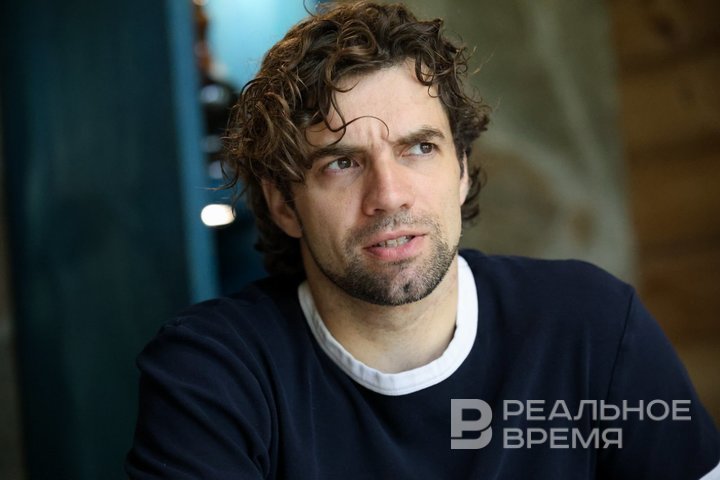
I hate budgets. But what can you do? For your idea to come to life, you have to go through various stages of preparation and approval.
“I invested all my savings in my agency; I risked everything”
To create a programme, you need a venue and, ultimately, funds. Are agreements with sponsors and the search for financing for productions also your responsibility?
Yes, the agreements are on me. Fortunately, when we created the first productions, there were people who supported us and gave us the opportunity to realise these projects. I invested all my savings, which I had earned through years of hard work, into my agency. I risked everything. It was important for me to try and see how much this was truly mine.
Moreover, by that time, my career as a ballet dancer was at its peak. So, for me, it was certainly a challenge.
What new projects do you hope to realise in the near future?
I hope that within the next year to a year and a half, we will stage the production Pushkin. The Fate of the Poet. I will play the lead role, and I also hope that my original directorial vision will make it to the final version — the way I see it. Pushkin always remains relevant, but I wanted to create a production specifically about him, not about his works. The music will include pieces by Tchaikovsky, Glinka, and several other composers.
Another production I am eagerly anticipating and wish to bring to life is the ballet Don Juan.
Will you be using Pushkin’s libretto as well?
No, this will be a separate production. Don Juan is a distinct archetype. Over time, there have been various versions of Mozart’s opera, Byron’s literary Don Juan, and Pushkin’s Don Juan. Surprisingly, this story has been adapted into film rather rarely — and, by the way, I really like the movie with Johnny Depp and Marlon Brando. But our storyline will be created from scratch.
And whose music will it be?
I have decided to use the music of the Mexican composer Antonio Márquez. The music already exists, but we will need to arrange and adapt it for ballet. It is a long process, and here everything depends on finding partners willing to help us realise the project. I do not want this to be a small production — I envision a large-scale ballet with many artists. A full-fledged ballet.
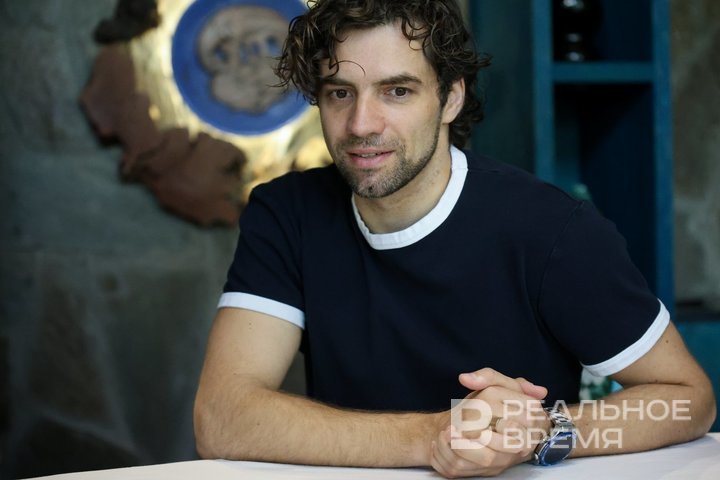
Sometimes it seems to me that if there were no mobile phone — a killer of time — I would probably get more done.
How do you manage to combine preparing your own productions with your career as a performer?
I don’t (laughs — editor’s note). Sometimes it seems to me that if there were no mobile phone — a killer of time — I would probably get more done. And of course, laziness gets in the way. If I weren’t lazy, I would accomplish more.
On top of that, there are limiting factors that prevent me from fulfilling all my plans. Complexes, for example. After all, I am just an ordinary person, and I have them too.
“The word ‘revolution’ has nothing good about it — only the burning of unclear bridges”
Among other things, you also work with children and young people, serving as a jury member on a project about children’s ballet on the Kultura channel. What goes on there?
Yes, the project is called Big and Small on the Kultura TV channel. Every year, the jury members and I gather to watch various groups from all over Russia and select the children who impressed us the most in the moment. It’s not a competition — rather, it’s a kind of talent showcase. Sometimes it’s very difficult to single someone out, because there are so many unique and talented children from all corners of our vast country.
Every time, every year, I am increasingly amazed by the leaders of these studios. How do they find the strength and motivation to constantly create projects, performances, pieces, participate in competitions, and take children somewhere so that an understanding of culture is ingrained in their very blood? I understand the enormous effort behind it all. After all, these are often groups from the most remote corners of our country. It’s simply astonishing.
That is why, alongside large and spectacular projects, it is very important to create an initiative that would help these remarkable groups to learn from already established artists.
Do you think the system for training ballet dancers needs to change today? Or is everything fine as it is?
I believe the Russian ballet school is already moving in that direction. Children are given the opportunity to perceive dance in a contemporary way, but the foundation remains the foundation, so that the Russian Ballet Academy or the Moscow State Academy continue to train professional artists according to their specific focus — classical ballet.
At the same time, I see many well-prepared young dancers performing modern productions right from the start, even at their graduation concerts. That makes me happy. By the way, when I graduated, we performed choreography by Alvin Ailey to Bach’s music for our state exam. That was already impressive back then. And now there are even more works that young artists can perform.
I believe that some reassessment should take place in the development of our ballet school, but there is nothing good in the word “revolution” — only the burning of unclear bridges on the way to a foggy future. I think everything should happen gradually, evolutionarily. Perhaps not at such long intervals, but more condensed. Yet, in my view, the priority must still be the preparation of a foundation to ensure that classical ballet in Russia continues to exist at the highest level.
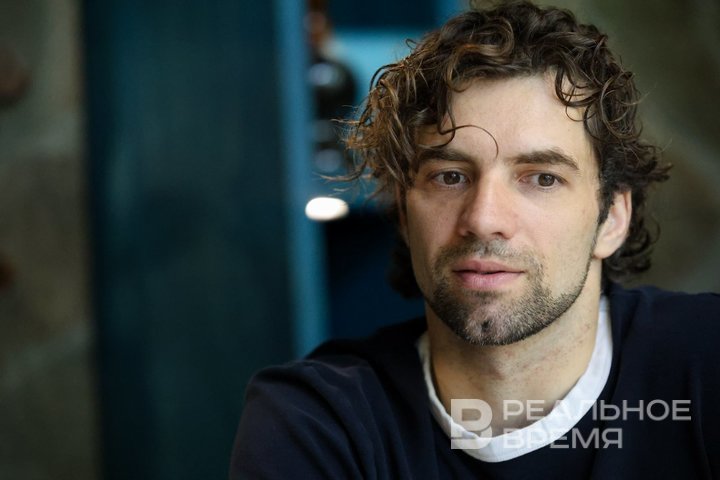
The foundation is meant to be just that — a foundation — so that the Russian Ballet Academy or the Moscow State Academy can train professional artists according to their specific focus: classical ballet.
Is there a benchmark in ballet that you personally aspire to?
For me, the benchmark is the teachers I have been fortunate to work with. First and foremost, Alexander Nikolaevich Vetrov, the man who helped me become a ballet principal, who nurtured me and constantly corrects my shortcomings. Undoubtedly, Mikhail Nikolaevich Lavrovsky is also a standard for me — at 83 years old, he continues to teach classes and inspire others — simply by being himself. Another benchmark for me is Lorka Leonidovich Myasin, who, despite his age, still dances and performs. He has so much strength and energy!
Watching them inspires me. I want to be just as driven towards success in the future as they are at their age. They are in absolute harmony with themselves because they truly believe in what they do and how they do it. They are idols for me — the representatives of our “golden” generation!