Money by the will of Allah: why Islamic banking market growing slowly in Russia
During the next three years of the experiment, Russia hopes for increased investment and the legalisation of shadow players
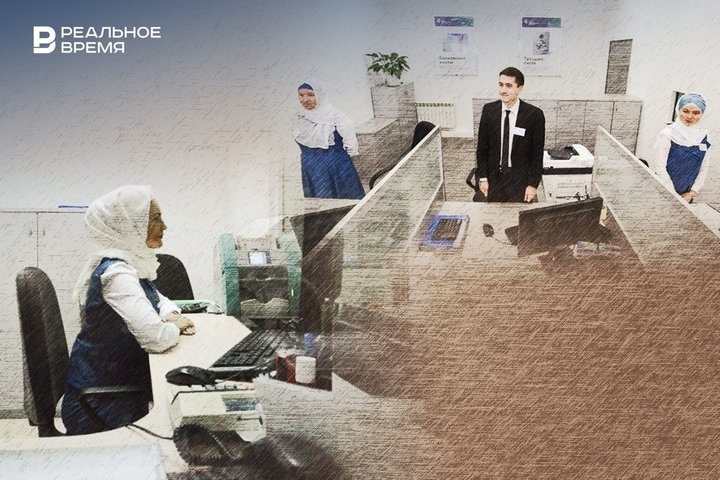
The experiment on Islamic banking in Russia, extended for another three years, is showing modest results so far, according to experts. There are currently 32 organisations in the register, and about 4 billion rubles in investments have been attracted over two years. At the same time, the potential of the Islamic finance market in our country is estimated at 1 trillion rubles. What explains the lack of investment, what is holding back the growth of the market, and does the legal regulation need to change in order to increase the volume of transactions — these are the questions investigated by Realnoe Vremya.
“It took ten years to convince the regulator of the programme’s viability”
The experiment on Islamic banking began in Russia in 2023 and was originally scheduled to conclude in 2025, but it has been extended for another three years — until 1 September 2028. Moreover, other regions may soon join the initiative, in addition to Tatarstan, Bashkortostan, Dagestan and Chechnya. At present, there are 32 business entities in the register, 14 of which are registered in our republic.
In May, during the KazanForum, Chairman of the State Duma Committee on the Financial Market Anatoly Aksakov expressed concern over the low volume of attracted investments — around 4 billion roubles over the two years of the pilot’s operation. At the launch of the experiment, there were high hopes for it as a means of bypassing Western sanctions, but there has indeed been no significant flow of Islamic investment so far. According to State Duma deputy from Tatarstan Ayrat Farrakhov, the sanctions imposed against Russia have had a negative impact on partners, who fear falling under restrictions themselves, which is why this segment is not developing at the pace that was expected.
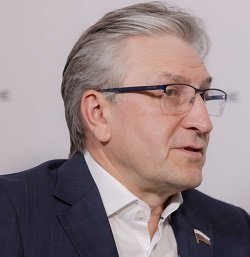
During this period, he said, significant progress has been made: “Issues of education have begun to develop actively, specialists have started to emerge, the Muslim population has expressed satisfaction, and most importantly — the regulator has, during this time, signed a number of strategically important documents and agreements with the international organisation AAOIFI (the organisation that defines international standards in the field of Islamic finance).” Farrakhov believes that the upcoming three years of the experiment will be a period for establishing clear standards that will help create conditions for “companies, both credit and non-credit institutions, to participate in the experiment rather than operate in the shadows, which is why we will systematically work to lower the barriers.”
“At the same time, my assessment is very positive; we are moving steadily in this direction, and I believe that Russia will take a worthy place in the sector of partnership (Islamic) finance. Russia is an extremely interesting country for foreign investors, for the Gulf states and those involved in partnership finance, and it is not only Muslim countries that are showing interest,” the speaker added.
“A significantly greater volume of investment will be attracted in the future”
Chairman of the State Duma Committee on Economic Policy and State Duma deputy from Tatarstan Maksim Topilin stated that the partnership finance experiment has already opened a window of opportunity for the regions where it is being implemented. Thanks in part to this initiative, it has been possible to reduce the risks of sanctions pressure: instead of the unfriendly countries that previously invested in the republic, Tatarstan has acquired and continues to acquire new partners in the Middle East, Africa and Asia, where this instrument is widely used.

According to him, every effort is being made within the framework of the experiment to improve the legislation. “Precisely to boost investment, a new law has been adopted. The key addition is the development of standards for partnership products. Firstly, this will contribute to the creation of a clear and understandable instrument and to the product’s recognition by the market, as well as receiving approval from the Bank of Russia. Secondly, the law will make it possible to apply state support measures where they exist.”
Topilin called the extension of the law for another three years a logical decision: “It is hard to assume that partnership instruments could have reached full capacity over the two years of the experiment — everything is proceeding step by step. The first year was primarily devoted to organisational matters. I believe the set of measures currently being implemented gives us hope that, under the partnership financing programme, a significantly greater volume of investment will be attracted in the future.”
“Equal conditions with the established financial sector are needed”
Rustam Sagdeev, director general of one of the first Islamic financial organisations, Amal, called the extension of the partnership finance experiment a positive and important step: “Over the course of two years, it has been possible to establish a legal foundation, conduct the first transactions within the framework of Federal Law 417, and build cooperation between participants and the regulator, which has led to an increase in investment volumes. However, for large-scale development, further improvement of legislation is necessary — not just an extension, but the creation of a full-fledged regulatory framework that takes into account the specifics of the Islamic approach.”
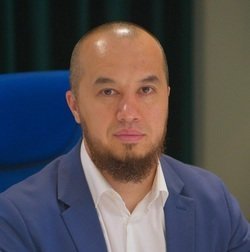
Renat Yedikhanov, chairman of the Board of As Salam, believes that the development of Islamic banking requires the introduction of technologies innovative for the Russian market. At present, the product line for financing individuals and businesses has largely been formed. For the further development of the partnership finance sector, it is necessary to develop the partnership capital market and its infrastructure, the expert is convinced. Without this, the full functioning of the partnership finance ecosystem, he says, is impossible:
“This means we have not yet made enough effort to create the necessary conditions”
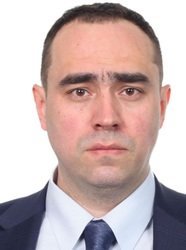
Ruslan Khaliullin, an expert at the Russian Centre for Islamic Economics and Finance at the Russian Islamic Institute, noted that in Tatarstan there is an annual doubling of both turnover and transactions in partnership financing. According to him, this is due to the active work of the republic’s leadership and the participants in the experiment, as well as the increased level of financial literacy among the population.
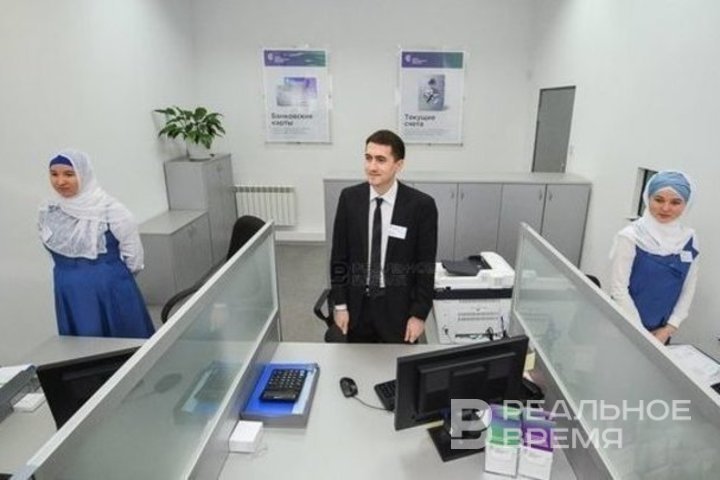
He also noted that major Russian banks have joined the experiment and are now exploring their clients and setting up marketing — not only in our country but also in other states, primarily those with Muslim populations.
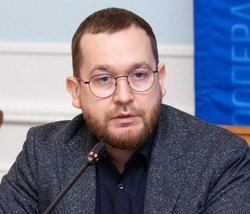
According to the expert, before we can talk about increasing foreign investment, we first need to work on the country’s investment attractiveness. For investors, currency, sanctions, and infrastructure risks need to be addressed, and these tasks require joint efforts, he concluded.
“The tax burden has increased, and this has affected the cost of partnership finance products”
Timur Khaertinov, Chairman of the Association of Partnership Finance Organisations (APFO), is confident that the potential for attracting investments through Islamic banking is much higher. However, several factors are hindering this — including regulation, the short time since the experiment began, low awareness among potential clients, the increased tax burden, and sanctions. According to the expert, two years is too short a period to draw any conclusions about the programme’s results, as the developing regulatory framework and regulatory practices were mostly established only by the midpoint of this period.
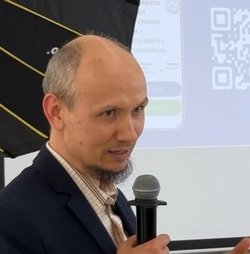
According to the expert, the current legislative framework is largely designed for major market players, primarily banking institutions, which have diversified sources of investor funds and greater opportunities to utilise the existing financial infrastructure for their development. At the same time, it is the smaller partnership finance organisations that, due to their specific nature, are closer to the potential users of these products and better understand their needs. All of this has significantly restrained the initial process of market formation, noted Khaertinov. Therefore, what is needed now is not only an extension of the experiment’s duration but also the creation of economic mechanisms and financial incentives to ensure its successful continuation.
“It is important that market participants recognise the need for joint decision-making and coordination of actions. Alongside the Association of Russian Banks, a new organisation has emerged — the Association of Partnership Finance Organisations (APFO), which helps to take into account the views of all interested parties. At the conclusion of the experiment, its participants would like to see a transition from experimental to permanent comprehensive regulation, the formation of an organised partnership finance market with diverse participants, exchanges, investment platforms, funds, and so on, the alignment of conditions for all market players, and the creation of economic incentives for development,” the speaker emphasised.
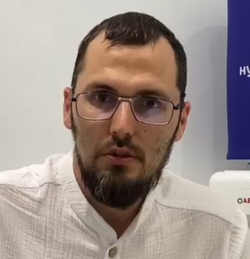
Ayrat Shakirov, director of the company Nurfinans, admits that currently the majority of individuals — and the company primarily works with them — have directed their investments into bank deposits; another portion has invested in real estate, as it is the most conservative and understandable instrument; while others have chosen to invest in gold.
Partnership finanсing — a promising direction for banks
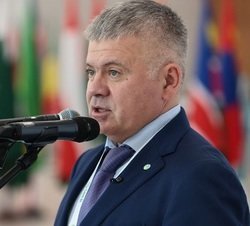
The partnership financing experiment has demonstrated that there is a steady interest in Islamic financial instruments in Russia, believes Oleg Ganeev, Senior Vice President of Sberbank PJSC. According to him, during the past period the country has seen growth in client demand and trust, and the credit organisations participating in the experiment continue to attract new clients who had previously not engaged with banks.
According to him, much work still lies ahead to educate the population, many of whom have not even heard the term “partnership finance” — this new alternative banking business model for our citizens.
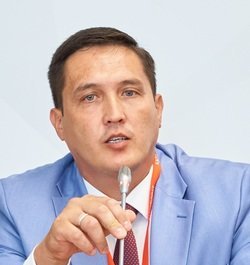
Speaking about the market’s future prospects, the expert expects steady growth in demand for partnership financing products, especially considering the current Bank of Russia’s policy of lowering the key interest rate. He also hopes for the establishment of unified standards — their unification will greatly simplify operations and the development of this market segment. Regarding the modest initial results of the project, the speaker agrees with his colleagues: “The partnership financing experiment has only been running for two years, and its first phase was dedicated to registering financial institutions with the Bank of Russia. A significant amount of time was spent making decisions, defining the niche, and developing products. Therefore, the first year of the experiment can be regarded as the launch and establishment phase.”
Meanwhile, consumers of the Islamic finance market are cautiously assessing the effectiveness of the experiment. Artur Elkanov, Marketing Director of halal products at ITLE, pointed out that not all partnership finance instruments are accessible:
