Non-symbolic protection: consequences of a legal amendment safeguarding religious symbols from retouching
The “loss” of religious symbols in images of places of worship will now come at a high cost
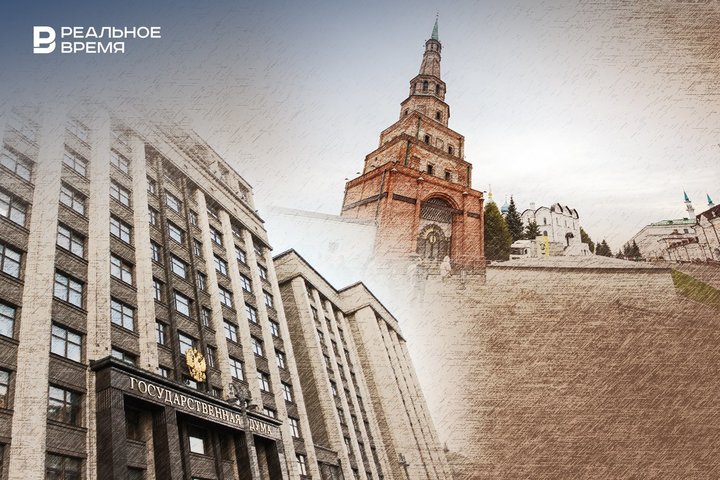
The State Duma has approved an amendment to the law “On Freedom of Conscience and Religious Associations,” introducing liability for what has been dubbed a “crossfall”. Incidents like the one on the 2022 City Day poster “Moscow — City of Craftsmen,” where Orthodox crosses on Saint Basil’s Cathedral were replaced with images of balloons on sticks, will no longer be tolerated. At the same time, the amendment is meant to prevent scandals such as the one in 2023, when the Bank of Russia had to recall newly issued 1,000-ruble banknotes after the former palace church of the Kazan Kremlin was printed without an Orthodox cross. Expert opinions on the legislative changes, assessments of their implications for secular life, and legal forecasts on the prospects of potential disputes — in Realnoe Vremya’s report.
From proposal to adoption — 51 days
In a record-short period — from May 26 to July 15, 2025 — the bill aimed at protecting Orthodox crosses, Muslim crescents, and other religious symbols of faiths present in Russia passed through all stages of consideration. Over the course of these 51 days, the wording of the proposed amendments was clarified and significantly tightened.
The document prohibits the depiction of places of worship and religious sites in advertising, media, on the internet, and in the sale of goods and provision of services without their religious symbols — for example, the Christian cross, the Muslim crescent, or the Star of David. The only exceptions are cases where reproducing religious symbols could lead to their desecration, or when the site is shown in the context of a historical period during which such symbols had not yet appeared.
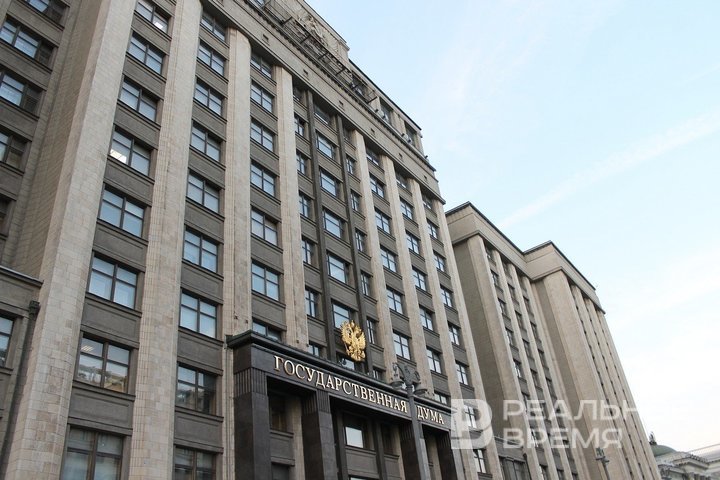
More precisely, in its final version, this provision in the law reads as follows: “The use of images and other forms of reproduction of places of worship and other religious sites, official heraldic emblems, or their recognisable elements, which, at the time of reproduction, contain religious symbols of the religions listed in the preamble of this Federal Law, without such symbols — including in the media, in information and telecommunications networks, in the sale of goods, the performance of works, the provision of services, and in advertising — is not permitted, except in cases where historical images are reproduced with an indication of the relevant historical period, provided that during that period the respective religious symbols were absent, or when the reproduction of religious symbols results in their desecration.”
As a result, violators of the new provision will fall under Part 2 of Article 5.26 of the Code of Administrative Offences of the Russian Federation, according to which intentional public desecration of religious symbols carries an administrative fine ranging from 30,000 to 50,000 rubles for individuals, or up to 120 hours of compulsory labour, and from 100,000 to 200,000 rubles for officials.
To prevent attempts to “turn multinational Russia into a nationless state”
The adoption of the bill is driven by reasons clearly outlined in the explanatory note and the conclusion of the State Duma’s relevant committee, noted Vsevolod Nesterov, head of the legal department at Tatyurinform. These documents point to “instances of exclusion, retouching, and erasure of religious symbols,” as well as cases where crosses were missing from the domes of Christian churches in photographs, street posters, product packaging, exhibition hall interiors, banknotes, pages of periodicals, and internet sites. Lawmakers view this as an attempt “to turn multinational Russia into a nationless and non-religious country,” Nesterov believes.
Nesterov emphasised that during the discussion of the bill’s text, the opinions of the country’s major traditional religious organizations were solicited — Mulsim Spiritual Board of Russia, the Spiritual Assembly of Muslims of Russia, the Buddhist Traditional Sangha of Russia, the Legal Department of the Moscow Patriarchate, the Russian United Union of Christians of Evangelical Faith (Pentecostals), and the Federation of Jewish Communities of Russia. All of them supported the initiative.
Nesterov noted that the scope of those subject to the law primarily includes organizations, individual entrepreneurs, as well as state and municipal authorities. However, private individuals will also be required to comply with the law — for example, when publishing content online or posting advertisements.
In his view, it is assumed that all these entities possess the material and organisational resources necessary to ensure compliance with the law, and that they either have qualified specialists on staff or engage them externally. Bloggers with large audiences on social media have already been required to conduct monitoring, particularly with regard to content “offensive to human dignity and public morality, or expressing blatant disrespect for society,” to block access to such information, and to report such cases to Roskomnadzor.
“There is a risk that the provisions of the law will be applied to the media and advertising”
Lawyer Sergey Sychev says that the bill, which, according to the explanatory note, was introduced with the aim of protecting religion, originally focused more on retouching — that is, covering up or “photoshopping” religious symbols.

In theory, he emphasised, these images should be considered in relation to the presence of an offence against the religious feelings of believers, for which there is administrative and criminal liability. However, there is a risk that the provisions of this law may be applied to the media and advertising, giving other authorities additional means of influence.
“I believe the purpose of the bill was precisely to prohibit the use of such imagery on official documents, signs, coats of arms, and emblems, while in the case of civil circulation, it would have been better to specify in more detail what exactly cannot be edited or removed in terms of these symbols,” Sychev reflects.
“Even without malicious intent, the situation can be exacerbated”
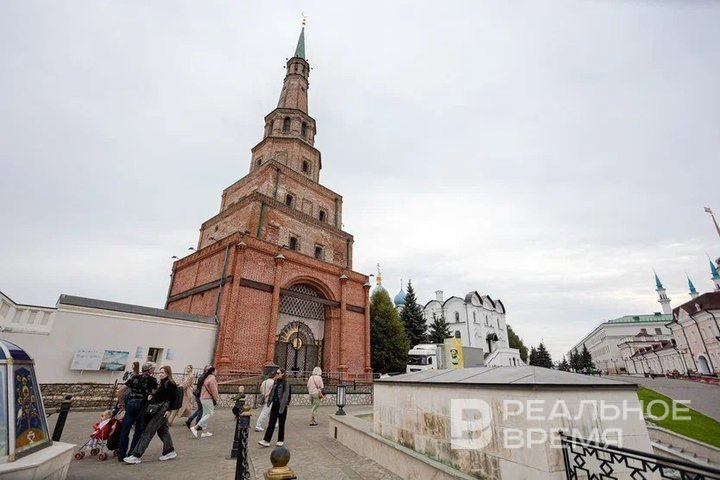
Anton Glukhov, founder of the news agency PromRating, immediately recalled the scandal connected with the 2023 recall of new 1,000-ruble banknotes featuring Kazan following the adoption of the law. The banknotes depicted the former palace church of the Kazan Kremlin, which houses the Museum of the History of Statehood of the Tatar People and the Republic of Tatarstan. Although it has long ceased to function as a place of worship and has been without crosses for many years, some at the time believed that this religious symbol had been deliberately omitted.

Anton Glukhov says that, in studying public opinion, he encounters statements on social media from orthodox-minded individuals who may label a person a heretic for the slightest deviation from religious tenets, as well as from those who interpret religion destructively. In this context, lawmakers may be doing a good deed-creating conditions where everyone understands: this is what a particular religion looks like, these are its dogmas, and there should be no deviation. This also applies to the media, which will now have to monitor their content carefully to avoid breaking the law.
“Today, the media are already very cautious when using and sharing information. People understand that even without any malicious intent, a situation can be inflamed simply by posting the wrong photograph, leading to scandal or criminal prosecution. This significantly restricts freedom, but on the other hand, the country is engaged in a special military operation, and perhaps this is not the time to allow free-for-alls of debate and misinformation. We must remain united! The media bear a special responsibility — journalists communicate with people, and when negative forces are at play and the country is in a difficult situation, it is truly necessary to think carefully before publishing any information,” he noted.
No cross on them?
The background to the amendments introducing liability for the “removal” of crosses, crescents, and other religious symbols from places of worship and their elements did not begin in October 2023. At that time, it apparently merely reached its peak, as the banknote is an object closely scrutinised by all residents of Russia. The intensity of the controversy was not cooled by the fact that the image of the former place of worship without the cross accurately reflected its actual appearance. Moreover, the very idea of placing a real or digitally added Orthodox cross on the Museum of the History of Statehood of the Tatar People and the Republic of Tatarstan — a site inseparably linked with Islam — could theoretically have been perceived ambiguously by part of the republic’s population. As a result, the release of the new 1,000-ruble banknote honouring Kazan was postponed — and has yet to appear.
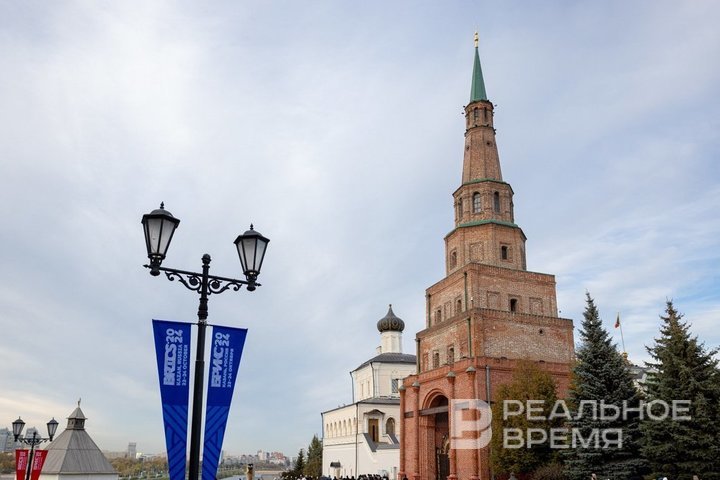
The intensity of the controversy was not diminished even by the fact that the image of the former place of worship without a cross accurately reflected its actual appearance.
Earlier — in 2022 — posters featuring a stylised image of Saint Basil’s Cathedral were released in Moscow for City Day, where, instead of the actual Orthodox crosses, mugs were displayed. Following protests from activists, posters in subsequent years were produced with clearly visible crosses.
The creators of the concept art symbol for the Novgorod region — the stylised image of the Millennium of Russia monument — replaced no less real crosses with circles and sticks (after the scandal, they were restored to their rightful place).

Confusion and questions sometimes arise over the appearance of products as well. For example, on the packaging of Monastic Hercules, produced under the Russkiy Product brand, a monk is shown receiving a cup of porridge from a girl against the backdrop of a church whose domes bear crosses that are hardly discernible to the eye.